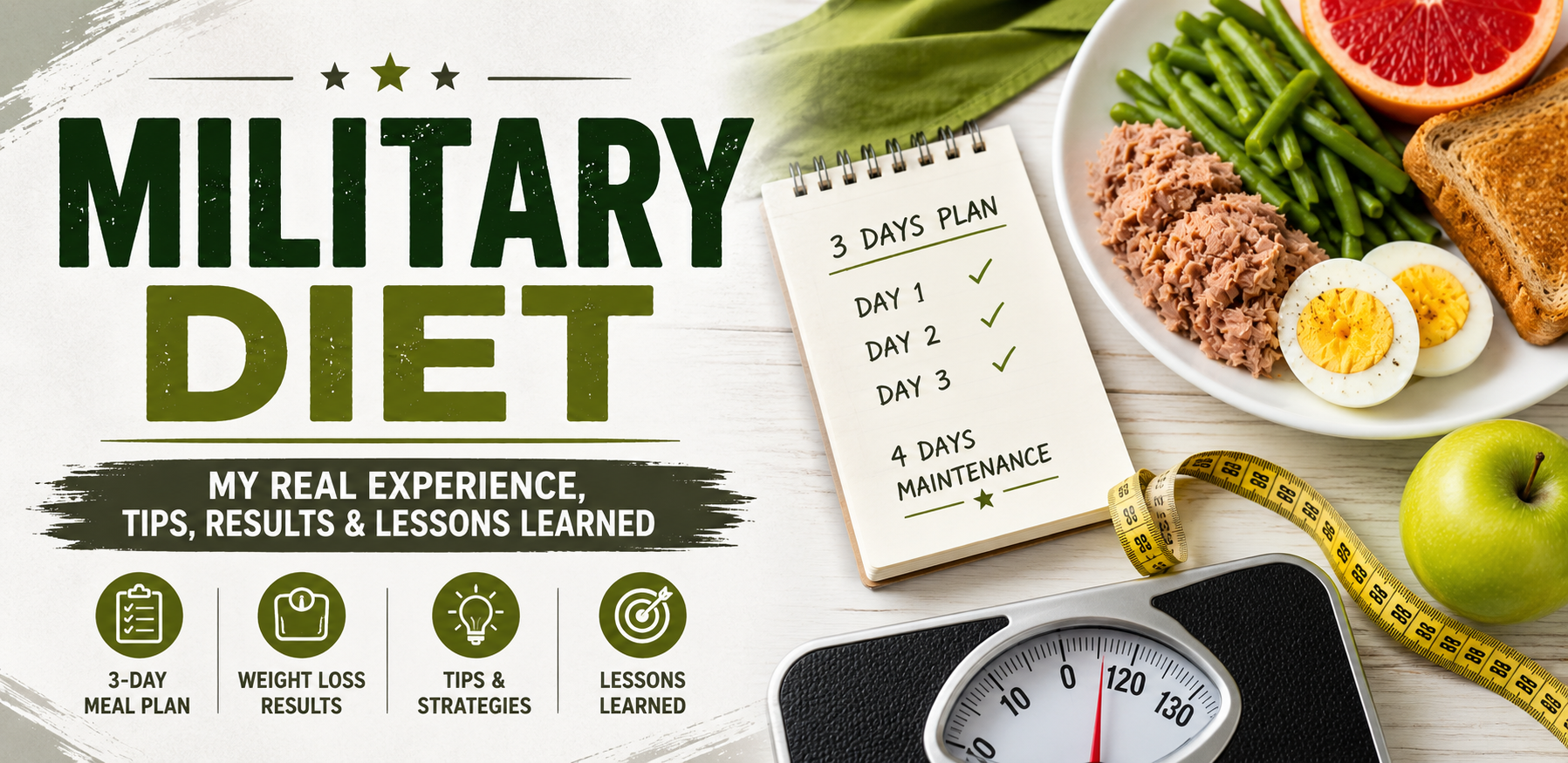
Military Diet: My Real Experience, Meal Plan & Weight Loss Results
A couple of years ago, I hit one of those frustrating phases where my jeans felt tighter every week, but I also didn’t have the patience for another “life-changing” diet plan.
I wasn’t looking to become a fitness model. I just wanted to feel lighter, stop snacking all evening, and maybe lose a few kilos before a family event. That’s when I stumbled across the Military Diet.
The name sounded intense. I honestly expected something involving boot camps, push-ups at sunrise, and eating plain chicken breast for every meal. Instead, it turned out to be a very structured 3-day low-calorie eating plan followed by 4 more flexible days.
I decided to try it exactly as written for one week.
Some parts surprised me. Some parts were honestly annoying. And some things people say online about the Military Diet are wildly exaggerated.
If you’re curious about whether this diet is actually useful, sustainable, or just another internet trend, here’s the real experience.
What the Military Diet Actually Is
Despite the name, it has nothing to do with the military.
No military organization officially created it, and no soldiers are required to follow it.
The basic idea is simple:
- Follow a strict low-calorie meal plan for 3 days
- Eat more normally for the next 4 days
- Repeat if needed
The first 3 days usually stay around:
- 1,100–1,400 calories daily
The next 4 days are less restrictive, but you’re still supposed to avoid overeating.
The original version includes foods like:
- Toast
- Peanut butter
- Eggs
- Tuna
- Apples
- Cottage cheese
- Bananas
- Green beans
- Ice cream
Yes, ice cream is actually part of the plan. That’s probably why the diet became viral.
Why I Tried It
What attracted me wasn’t the promise of “losing 10 pounds in a week.” Honestly, those claims always sound suspicious.
I liked the simplicity.
At the time, I was mentally exhausted from calorie counting apps and complicated meal prep routines.
I had MyFitnessPal installed. I had tried intermittent fasting. I even bought one of those fancy meal prep containers from Amazon that I used exactly twice.
The Military Diet looked almost too simple:
- No subscription
- No expensive shakes
- No special supplements
- No complicated recipes
Just a short meal plan and sometimes simplicity is exactly what people need to restart healthier habits.
My First 3 Days on the Military Diet
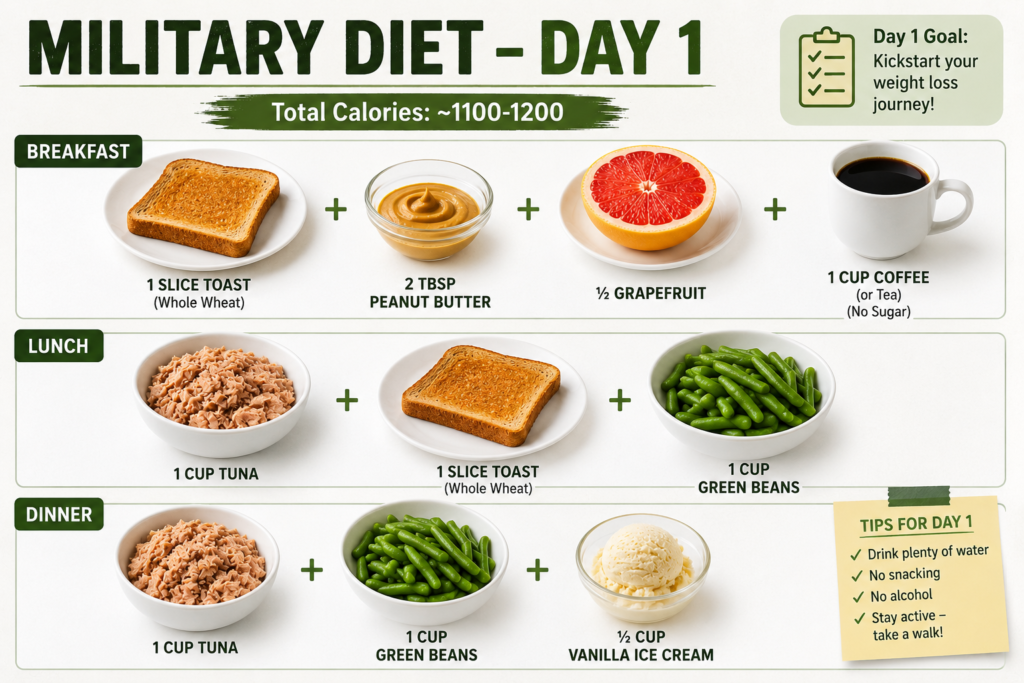
Day 1 Felt Easy… at First
Breakfast was small:
- Toast
- Peanut butter
- Half a grapefruit
- Coffee
By lunchtime, I realized something important:
This diet is low calorie in a very noticeable way. I usually eat bigger portions without thinking about it. So even though the meals weren’t terrible, I definitely felt hungrier than usual. Dinner included tuna, vegetables, and a small serving of vanilla ice cream. Oddly enough, that tiny bit of ice cream helped psychologically. It made the diet feel less punishing.
But around 9 p.m., I made my first mistake. I started “just tasting” snacks from the kitchen.
A few chips here. A biscuit there. That’s where many people fail on restrictive diets. Hunger slowly turns into random grazing.
I ended up drinking sparkling water and going to bed earlier just to avoid mindless snacking.
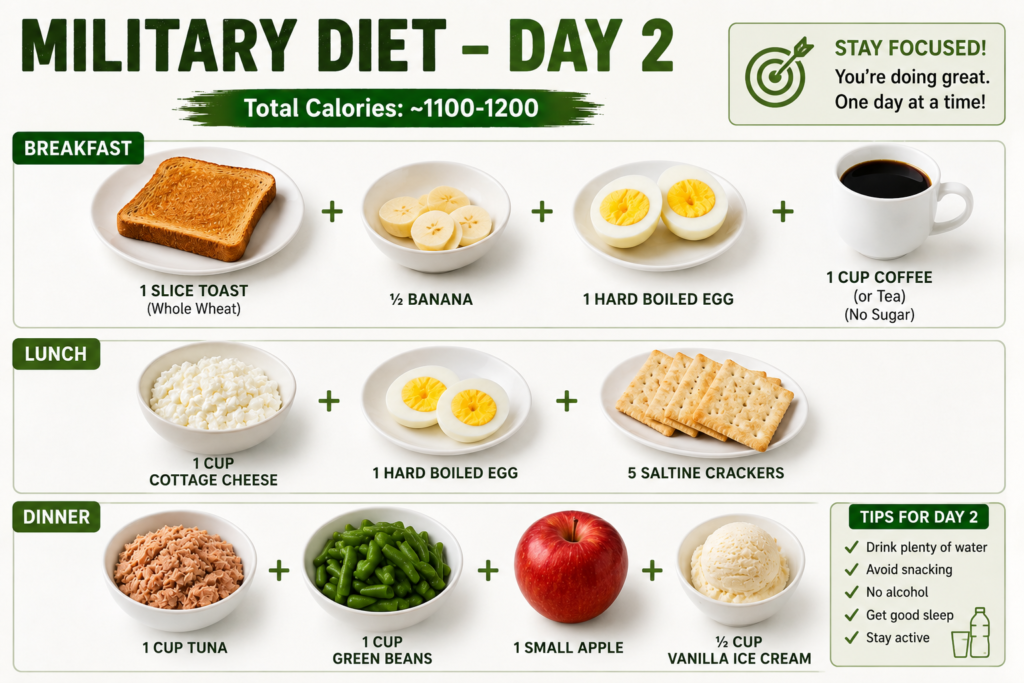
Day 2 Was the Hardest
This was the day my energy dipped. I work at a desk most of the day, and normally I snack while working. Suddenly removing those habits felt strange.
I also noticed something important:
The Military Diet doesn’t magically remove cravings. If anything, cravings become louder during the first few days. Around afternoon time, I wanted sugary coffee drinks badly.
Instead, I switched to:
- Black coffee
- Water
- Zero-sugar electrolyte tablets
That actually helped more than I expected.
One thing I learned quickly:Sometimes people confuse dehydration with hunger.
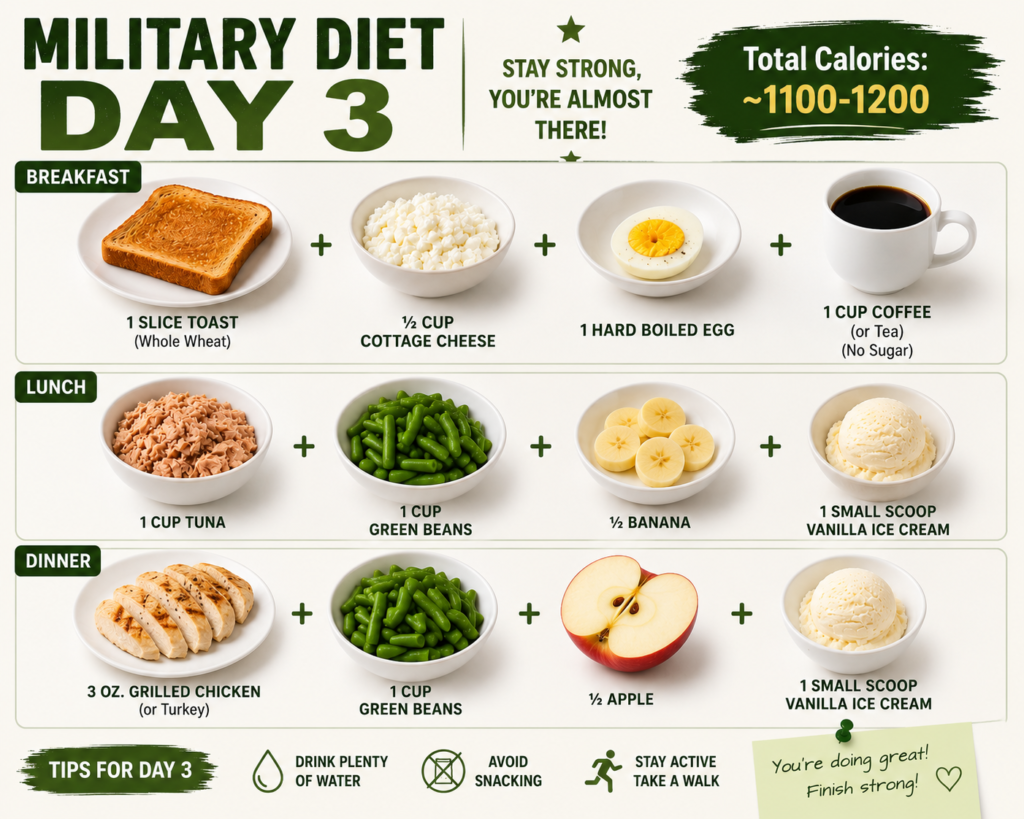
Day 3 Was More Mental Than Physical
By the third day, my stomach had adjusted slightly. I wasn’t stuffed after meals, but I also wasn’t constantly starving anymore. The hardest part became social situations.
My friends wanted takeaway food that evening, and suddenly the Military Diet became very inconvenient.
That’s one thing most online reviews don’t mention enough:Strict short-term diets can make normal life awkward.
You either:
- Skip social meals
- Explain your diet repeatedly
- Or give in halfway through
I finished the third day mostly because I was curious about the results.
Did I Actually Lose Weight?
Yes.
But probably not in the way people imagine. After one week, the scale showed I had lost around 2.5 kg.
Sounds impressive, right?
But here’s the honest truth:A lot of that was likely water weight. When calories drop suddenly, especially carbs and sodium, your body releases stored water.
That doesn’t mean the diet is fake. It just means the dramatic early results people advertise online are often temporary.
Still, I did notice:
- Less bloating
- Reduced late-night snacking
- Better portion awareness
- Fewer cravings after the first week
And honestly, those habits mattered more long term than the number on the scale.
What the Military Diet Gets Right
1. It Removes Decision Fatigue
One underrated benefit:You don’t spend all day wondering what to eat.
Everything is already planned.
That structure can help people who feel overwhelmed by nutrition advice online.
2. It’s Cheap
Compared to trendy diet programs, this one is affordable. Most foods are basic grocery items.
I spent far less money than I usually do ordering random convenience food.
3. It Teaches Portion Awareness
This was probably the biggest lesson for me. Before trying the Military Diet, my “normal” portions were much larger than I realized.
After a few days, I became more conscious of:
- Snacking
- Liquid calories
- Emotional eating
- Eating out of boredom
What the Military Diet Gets Wrong
1. It’s Hard to Sustain
This is not a lifestyle plan. It’s more like a short-term reset.
Very low-calorie diets become mentally exhausting if repeated too aggressively.
2. The Internet Overhypes It
You’ll see headlines claiming:
- “Lose 10 pounds instantly”
- “Melt belly fat fast”
- “Guaranteed results”
Real life doesn’t work that way.
Weight loss depends on:
- Your starting weight
- Activity level
- Sleep
- Stress
- Eating habits after the diet ends
3. It Doesn’t Build Long-Term Skills
This is important.
The Military Diet tells you what to eat temporarily, but it doesn’t really teach:
- Meal planning
- Balanced nutrition
- Sustainable habits
- Emotional eating control
Without those skills, many people regain the weight.
My Biggest Mistakes While Trying It
Not Eating Enough Protein
I realized quickly that protein matters a lot for fullness. On some days, I felt hungry simply because the meals were too light in protein for my body.
If I did it again, I’d focus more on:
- Eggs
- Greek yogurt
- Lean chicken
- Tuna
- Cottage cheese
Not Staying Busy
This sounds funny, but boredom made dieting harder. The more I sat around thinking about food, the more I wanted snacks. Going for walks helped a lot.
Nothing extreme. Just 15–20 minutes outside after meals.
Expecting Motivation to Carry Me
Motivation disappears fast. Planning matters more. I started prepping meals the night before so I wouldn’t suddenly order fast food when hungry.
That small change probably helped more than the diet itself.
Tips If You Want to Try the Military Diet
Keep Expectations Realistic
Don’t expect dramatic permanent fat loss in three days.
Think of it more as:
- A short reset
- A way to regain control
- A structured break from overeating
Drink More Water Than You Think You Need
Low-calorie diets can leave you feeling tired or give headache. Hydration genuinely helps.
I kept a large reusable water bottle on my desk the entire week.
Don’t Treat the 4 “Off Days” Like a Cheat Weekend
This is where many people undo progress. The flexible days are supposed to be moderate, not an all-you-can-eat reward phase.
Add Light Activity
You do not need intense workouts. Honestly, hard workouts felt terrible while eating very low calories.
But walking worked well.
I used my phone step counter and aimed for:
- 7,000–10,000 daily steps
That felt sustainable.
Who Probably Shouldn’t Try the Military Diet
This diet isn’t ideal for everyone.
I personally wouldn’t recommend it for:
- People with a history of eating disorders
- Teenagers still growing
- Pregnant women
- Anyone with medical conditions requiring stable nutrition
- People already eating very low calories
If someone has health concerns, talking to a doctor or registered dietitian makes far more sense than copying internet diet trends.
What Happened After I Stopped
This part matters most. After the Military Diet ended, I noticed something unexpected:
I didn’t actually want huge meals anymore.
The short reset helped me become more aware of:
- Portion sizes
- Snacking habits
- Mindless eating during screen time
But the lasting results only happened because I changed everyday habits afterward.
The things that actually kept weight off long term were much less dramatic:
- Walking more
- Eating more protein
- Sleeping properly
- Cooking at home more often
- Reducing random late-night snacks
Not glamorous. Just realistic.
And honestly, that’s probably why those habits worked.
Final Thoughts
The Military Diet isn’t magic, but it’s not complete nonsense either.
For me, it worked best as a temporary structure that interrupted bad eating habits.
It did help me lose some weight quickly, mostly because it sharply reduced calories and stopped constant snacking. But the real value came from the awareness it created afterward.
If someone expects the Military Diet to permanently transform their body in a week, they’ll probably end up disappointed.
But if they use it as a short reset and follow it with healthier long-term habits, it can be a useful starting point.
The biggest lesson I learned?
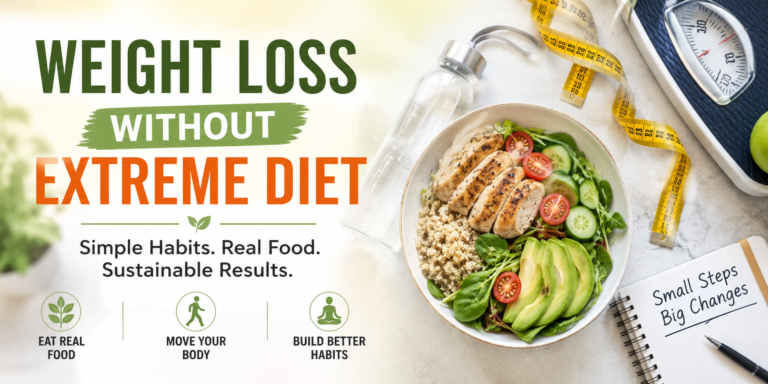
Most weight loss success doesn’t come from extreme diets.
It comes from the boring daily habits people repeat consistently after the diet ends.