
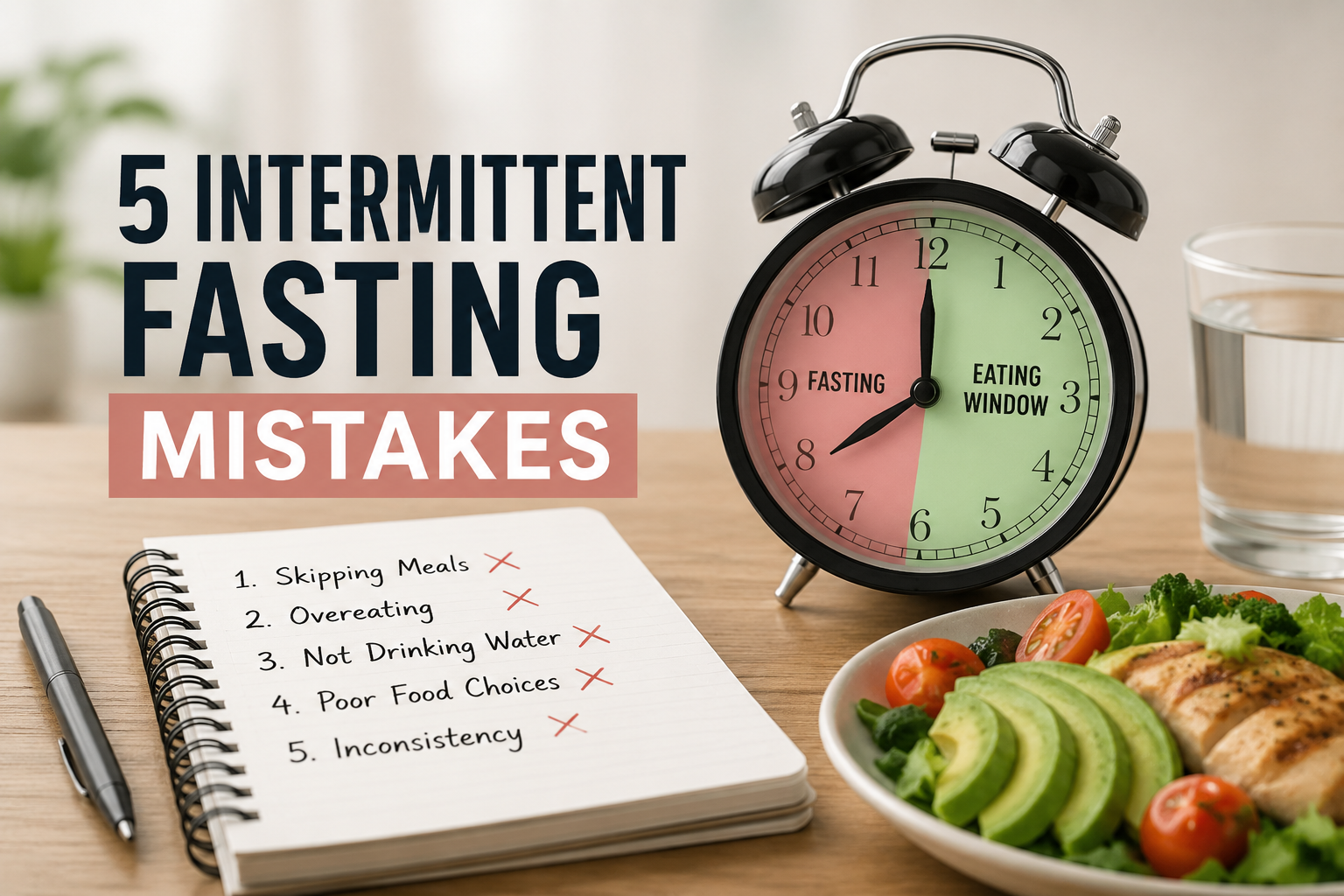
5 Intermittent Fasting Mistakes That Can Make Fasting Harder Than It Needs to Be
Intermittent fasting sounds incredibly simple when you first hear about it: choose a period for eating, stop eating when that window closes, and repeat the next day.
That simplicity is probably one of the reasons I became interested in it in the first place. There were no complicated meal plans to print out and no long list of foods I was supposed to avoid. Compared with diets where I felt like I had to think about food all day, having a clear eating window seemed refreshingly straightforward.
But there was one thing I underestimated: a simple plan isn’t necessarily an easy plan.
When I first experimented with intermittent fasting, I assumed that successfully reaching the end of my fasting window meant I was doing everything correctly. I paid much less attention to what happened during my eating window, how much water I drank, whether the schedule actually suited my routine, or why I was fasting in the first place.
Those details made a much bigger difference than I expected.
If you’re trying intermittent fasting yourself, avoiding a few common mistakes can make the routine more practical and sustainable. Here are 5 intermittent fasting mistakes that are particularly easy to make, along with some simple ways to deal with them.
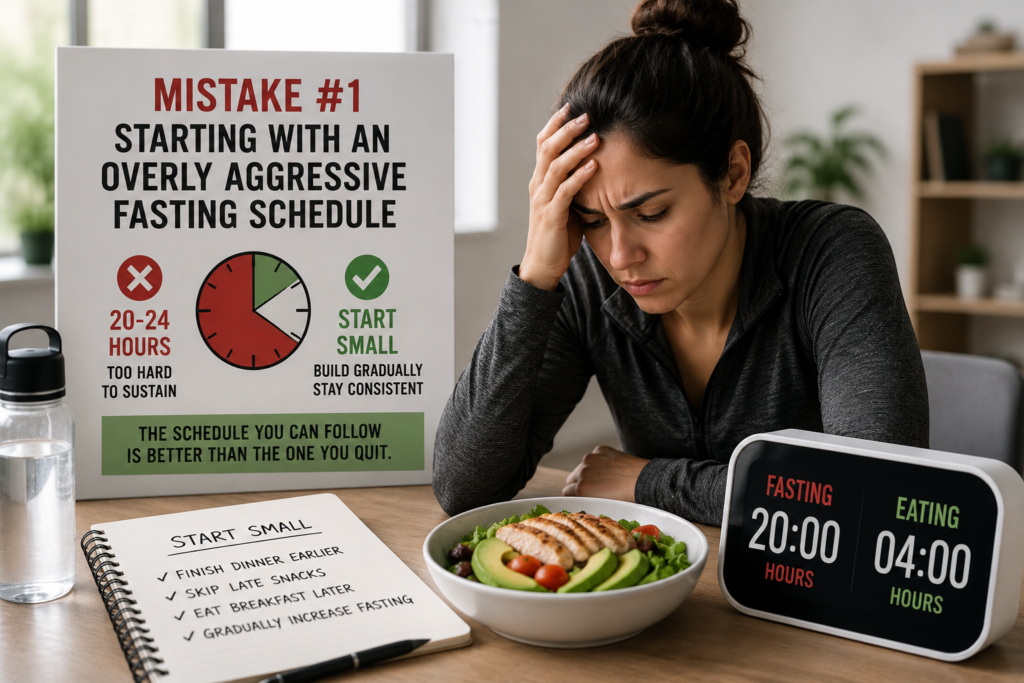
Mistake #1: Starting With an Overly Aggressive Fasting Schedule
One of the easiest mistakes is assuming that longer fasting automatically means better results.
When you’re excited about trying something new, it’s tempting to jump straight into a long fasting window. You might see people online talking about fasting for 18, 20, or even 24 hours and think:
“If they can do it, why shouldn’t I?”
I used to have a similar mindset. A longer fasting window felt like I was being more disciplined. The problem was that an aggressive schedule was much harder to fit around normal life.
If I became extremely hungry before my eating window, I spent too much time thinking about food. And when it was finally time to eat, making a sensible meal choice became much harder.
That’s not exactly the relaxed relationship with food I was hoping to create.
A better approach: Start with something manageable
You don’t need to begin with an extreme fasting schedule.
If you’re used to eating from early morning until late at night, simply reducing that eating period can be a significant change.
For example, you might start by:
- Finishing dinner a little earlier.
- Avoiding late-night snacks.
- Eating breakfast slightly later if that feels comfortable.
- Gradually increasing the overnight fasting period.
Some people eventually prefer the popular 16/8 intermittent fasting method, where they fast for approximately 16 hours and eat during an eight-hour window. Others feel better with a less restrictive schedule.
There isn’t much value in choosing a fasting schedule that looks impressive on paper but makes your everyday routine miserable.
The schedule you can follow comfortably is usually more useful than the one you abandon after three days.
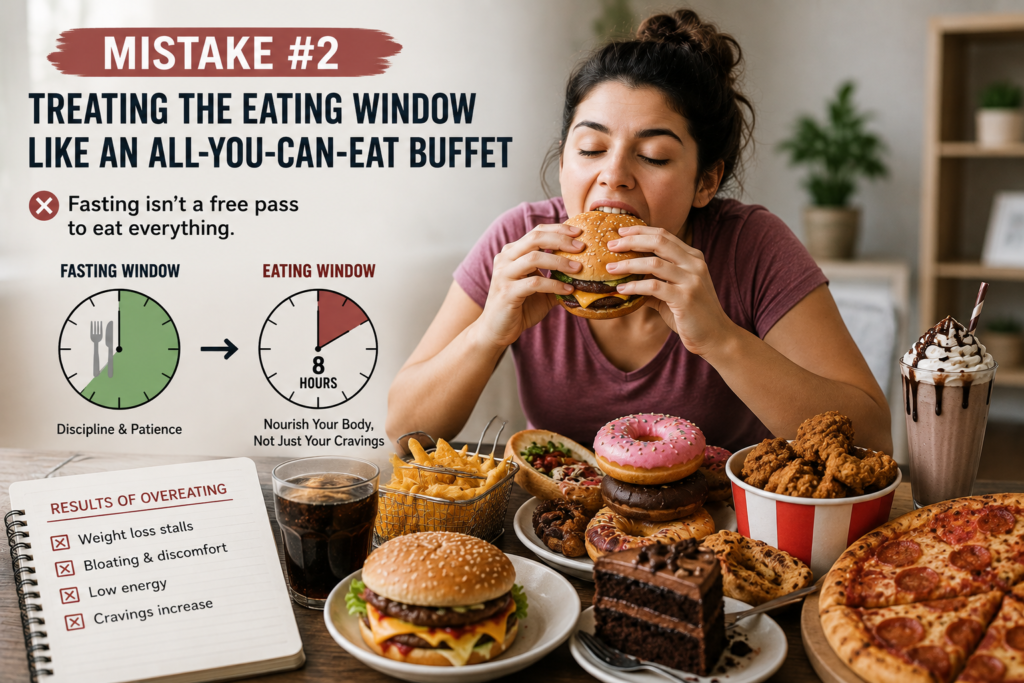
Mistake #2: Treating the Eating Window Like an All-You-Can-Eat Buffet
This was probably the biggest misconception I had when I started experimenting with fasting.
I thought:
“I’ve fasted for 16 hours. Surely I can eat whatever I want now.”
Unfortunately, an eating window isn’t a free pass to ignore everything about nutrition.
It is surprisingly easy to compensate for a long fasting period with a huge meal, especially when you’re extremely hungry. Add some snacks, sugary drinks, and another large meal later, and the fasting window may not have accomplished what you expected.
This matters particularly if your reason for trying intermittent fasting is weight management.
Fasting doesn’t magically cancel calories consumed during your eating window.
It can help some people reduce how often they eat and create a more structured routine, but overall food intake and food quality still matter.
What helped me
Instead of asking, “What am I allowed to eat now that my fast is over?” I started asking:
“What meal will actually keep me satisfied?”
That small change made my eating window feel completely different.
I try to build meals around foods such as:
- Protein sources like eggs, fish, chicken, beans, lentils, Greek yogurt, or tofu
- Vegetables and fruit
- Whole grains and other fiber-rich carbohydrates
- Healthy fats from foods such as nuts, seeds, avocado, and olive oil
- Enough water throughout the day
You don’t have to make every meal nutritionally perfect.
I certainly don’t.
There is still room for dessert, restaurant meals, and foods you simply enjoy. The goal is to avoid turning fasting into a cycle of restriction followed by overeating.
If you’re regularly reaching your eating window feeling desperate for food, that’s also worth paying attention to. Your fasting schedule may simply be too aggressive.
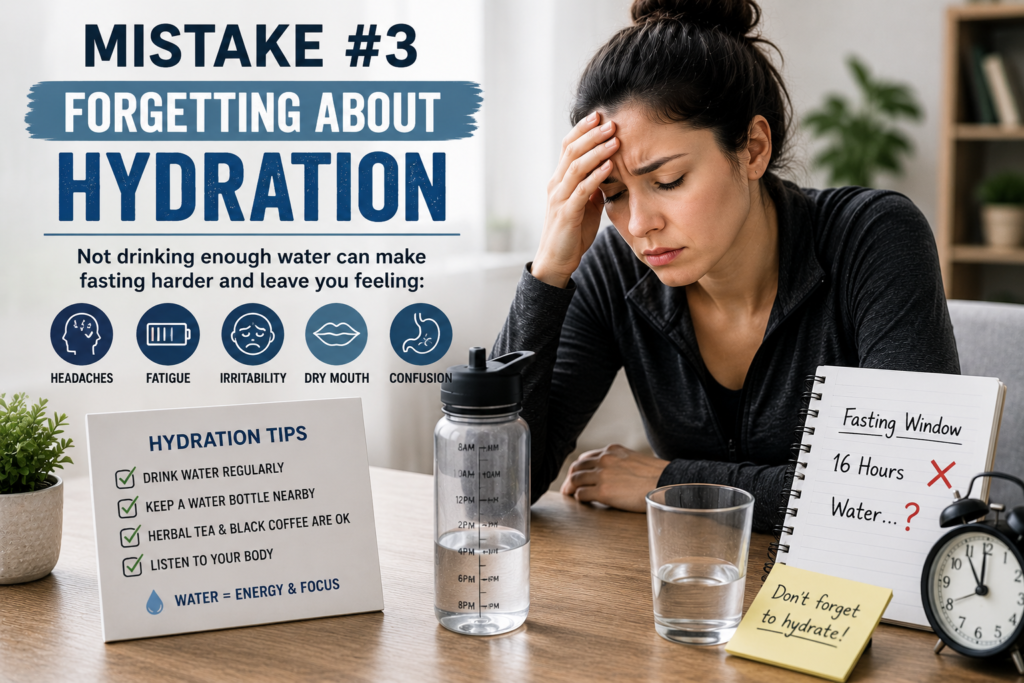
Mistake #3: Forgetting About Hydration
When I started focusing on meal timing, I became so concerned with when I could eat that I sometimes overlooked something much more basic:
Water.
You might not realize how much fluid you normally get alongside meals and snacks. Once you stop eating for a longer period, drinking enough becomes something you may need to think about more intentionally.
Dehydration can also make fasting feel unnecessarily unpleasant. Thirst, dry mouth, tiredness, and headaches can quickly turn a manageable fasting period into something you just want to end.
And sometimes what feels like hunger can simply be a reminder that you haven’t had anything to drink for several hours.
Make hydration part of your fasting routine
Keeping a water bottle nearby is one of the simplest habits I’ve found helpful.
Rather than waiting until I feel extremely thirsty, I drink water regularly throughout the day.
Depending on the fasting approach you’re following, common calorie-free drinks during a fasting period may include:
- Water
- Sparkling water without added calories
- Unsweetened tea
- Black coffee
Be careful with what gets added to tea and coffee, though. Sugar, milk, cream, flavored syrups, and similar additions contain calories and may no longer fit the fasting period you’re trying to follow.
You also don’t need to force yourself to drink enormous quantities of water just because you’re fasting. Hydration needs vary based on factors including body size, activity level, climate, diet, and health.
The practical lesson is much simpler: don’t let fasting make you forget to drink normally.
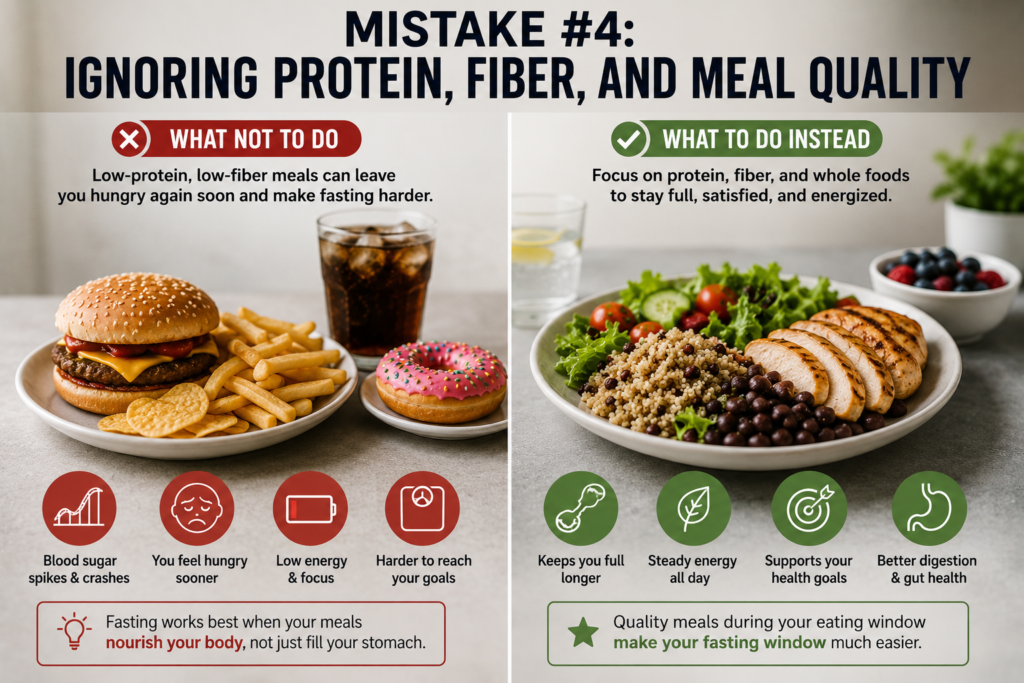
Mistake #4: Ignoring Protein, Fiber, and Meal Quality
There is a funny contradiction that can happen with intermittent fasting.
You can become extremely disciplined about your eating times while paying almost no attention to what you’re actually eating.
I’ve done this myself.
I could tell you exactly when my fasting window started and ended, yet the meal waiting at the end of it wasn’t always particularly balanced.
The problem is that meal quality affects how you feel during the next fasting period.
For example, breaking a fast with highly processed foods that don’t provide much protein or fiber might leave you hungry again relatively quickly. A balanced meal, on the other hand, tends to be much more satisfying.
Build meals that make the next few hours easier
I don’t count every gram of protein or measure every ingredient. Instead, I use a simple visual approach.
When putting together a meal, I try to include:
A source of protein
Protein can help make meals more satisfying and is particularly important if you’re exercising while trying to lose weight.
Examples include eggs, fish, chicken, cottage cheese, Greek yogurt, tofu, beans, and lentils.
A source of fiber
Vegetables, fruit, beans, lentils, oats, and whole grains can add fiber and volume to meals.
Some carbohydrates
Carbohydrates aren’t something you automatically need to eliminate because you’re fasting. Foods such as potatoes, rice, oats, fruit, and whole grains can fit perfectly well into a balanced diet.
Some healthy fats
Foods like nuts, seeds, avocado, and olive oil can also contribute to satisfying meals.
Think of the eating window as the period when you’re giving your body the nutrition it needs—not as a race to consume as much food as possible before the clock runs out.
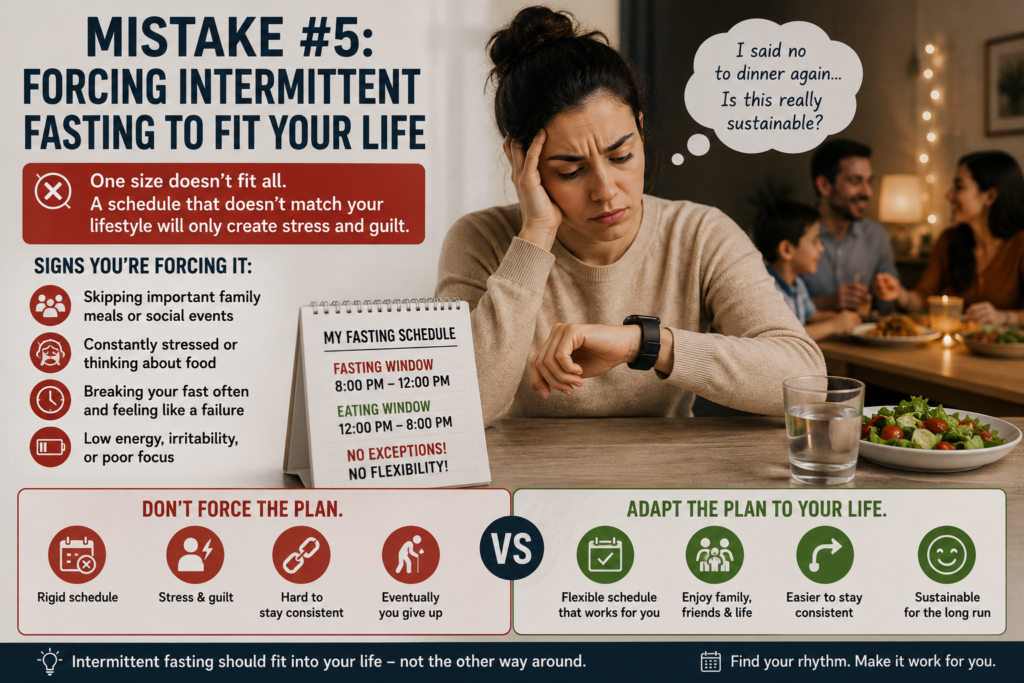
Mistake #5: Forcing Intermittent Fasting to Fit Your Life
This is the intermittent fasting mistake I think people talk about the least.
Sometimes the problem isn’t your discipline.
The schedule simply doesn’t fit your life.
Imagine deciding that your eating window ends at 6 p.m., but your family normally eats dinner together at 7:30.
You now have three options.
You can eat separately every night.
You can sit at the table watching everyone else eat.
Or you can repeatedly break your own fasting schedule and feel like you’ve failed.
None of those options sounds particularly sustainable to me.
I found that intermittent fasting became much easier when I stopped treating the fasting hours as an unbreakable law and started fitting the routine around my actual schedule.
Adjust the fasting window to your lifestyle
Before choosing your fasting schedule, think about:
- What time you normally wake up
- When you exercise
- Your work or school schedule
- When you usually feel hungry
- Family meals
- Social events
- What time you go to bed
For example, someone who doesn’t feel hungry in the morning may naturally prefer eating from around noon until the evening.
Someone who loves breakfast and doesn’t care much about eating late may prefer an earlier window.
Neither person is necessarily doing intermittent fasting “better.”
The goal should be to create a routine that you can realistically maintain without making food the center of your entire day.
And occasionally changing your schedule isn’t failure.
If friends invite me to dinner outside my normal eating window, I’d rather enjoy the evening and return to my normal routine afterward than spend the whole meal staring at my watch.
Consistency matters, but consistency doesn’t require perfection.
A Simple Way to Start Intermittent Fasting Without Overcomplicating It
If you’re new to intermittent fasting, I wouldn’t start by obsessing over complicated rules.
I’d keep the first couple of weeks deliberately simple.
Step 1: Look at when you’re already eating
For a few days, notice when you consume your first and last calories.
You might discover that your eating window is much longer than you realized simply because of small habits such as a late-night snack.
Step 2: Reduce unnecessary late-night eating
For many people, this is an easy starting point.
If dinner finishes at 8 p.m., try avoiding the automatic snack at 10 or 11 p.m.
That alone extends your overnight fasting period without dramatically changing your life.
Step 3: Choose a realistic eating window
Don’t automatically choose the longest fasting period you can tolerate.
Choose something that works with your routine.
You can always adjust it later.
Step 4: Plan your first meal
Knowing what you’re going to eat when the fasting window ends can prevent the “I’m starving, give me everything in the kitchen” situation.
A balanced meal with protein, fiber, carbohydrates, and healthy fats is usually a better idea than randomly grabbing whatever is easiest.
Step 5: Keep water nearby
Make drinking water part of your routine rather than something you remember only when you’re thirsty.
Step 6: Pay attention to how you actually feel
This is important.
A fasting routine shouldn’t become a daily battle where you feel constantly exhausted, dizzy, obsessed with food, or unable to concentrate.
If fasting repeatedly makes you feel unwell, stop and reconsider whether the approach is appropriate for you.
What About Exercise While Intermittent Fasting?
This was another area where I initially tried to make things more complicated than necessary.
Some people enjoy exercising before their first meal. Others notice that their workouts feel much better after eating.
I’ve learned not to treat fasted exercise as some special requirement.
Your training quality matters too.
If you feel comfortable exercising while fasted, it may fit nicely into your routine. If you feel weak or your performance noticeably suffers, changing your workout or eating schedule may make more sense.
And if you’re trying to maintain or build muscle, getting enough overall calories and protein remains important regardless of when you’re eating them.
The clock shouldn’t distract you from the basics. Read more about how many days a week should you workout
Intermittent Fasting Isn’t Suitable for Everyone
It’s also important to say something that often gets lost when intermittent fasting is discussed online:
You don’t have to fast.
Intermittent fasting is an eating pattern, not a requirement for being healthy or losing weight.
Some people enjoy the structure because it reduces mindless snacking and makes their eating routine simpler.
Other people become overly hungry, uncomfortable, or preoccupied with food.
Certain people should also get professional medical guidance before attempting intermittent fasting, particularly those who are pregnant or breastfeeding, have a history of eating disorders or disordered eating, take medications affected by meal timing, have diabetes or blood-sugar management concerns, or have another medical condition that could make fasting inappropriate.
Children and teenagers also shouldn’t casually follow restrictive fasting routines designed for adults without appropriate professional guidance.
If you’re uncertain whether fasting is safe for your circumstances, speak with a qualified healthcare professional rather than copying someone’s schedule from social media.
Final Thoughts
After experimenting with intermittent fasting, the biggest lesson I’ve taken from it is that the fasting window itself is only part of the picture.
You can follow a perfect 16-hour fasting schedule and still make choices that leave you hungry, tired, and frustrated.
Or you can use fasting as one small part of a much bigger routine that includes nutritious food, regular movement, enough sleep, hydration, and a realistic approach to weight management.
The 5 intermittent fasting mistakes I would pay the most attention to are starting too aggressively, overeating during the eating window, forgetting hydration, neglecting meal quality, and following a schedule that doesn’t fit your life.
Avoiding those mistakes doesn’t require complicated tracking.
Start gradually. Eat balanced meals. Drink enough water. Adjust your schedule when necessary. And pay attention to what your body is telling you.
Intermittent fasting worked much better for me once I stopped trying to “win” at fasting and started treating it as what it really is: a meal-timing tool that should make a healthy routine simpler, not harder.