10 Sedentary Lifestyle Symptoms You Should Never Ignore
Sedentary Lifestyle Symptoms: Warning Signs I Ignored Until My Body Started Complaining
There was a time when I thought I was doing fine because I went to the gym a few times a week.
The problem was that outside those workouts, I spent most of my day sitting.
I worked at a desk, drove everywhere, watched TV in the evenings, and spent far too much time scrolling through my phone before bed. Since I wasn’t gaining a lot of weight, I assumed my lifestyle was reasonably healthy.
Then small problems started appearing.
I felt tired even after a full night’s sleep. My lower back constantly felt stiff. Walking up stairs left me more breathless than it should have. My concentration wasn’t as sharp as it used to be.
At first, I blamed stress, work, and getting older.
The reality was much simpler.
I was spending too much time sitting.
Many people think a sedentary lifestyle only affects body weight, but the symptoms often show up long before significant weight gain occurs. Recognizing sedentary lifestyle symptoms early can help prevent bigger health issues later.
What Is a Sedentary Lifestyle?
A sedentary lifestyle is a way of living that involves long periods of sitting or very little physical activity throughout the day.
Common examples include:
- Sitting at a desk for most of the workday
- Driving long distances regularly
- Watching television for several hours daily
- Spending extended periods on phones or tablets
- Rarely participating in exercise or physical activities
Even people who exercise occasionally can still have a sedentary lifestyle if they spend most of the remaining hours sitting.
That’s what surprised me the most. A 45-minute workout couldn’t completely offset ten or more hours of sitting every day.
Common Sedentary Lifestyle Symptoms
Not every symptom appears immediately. Some develop gradually, making them easy to overlook.
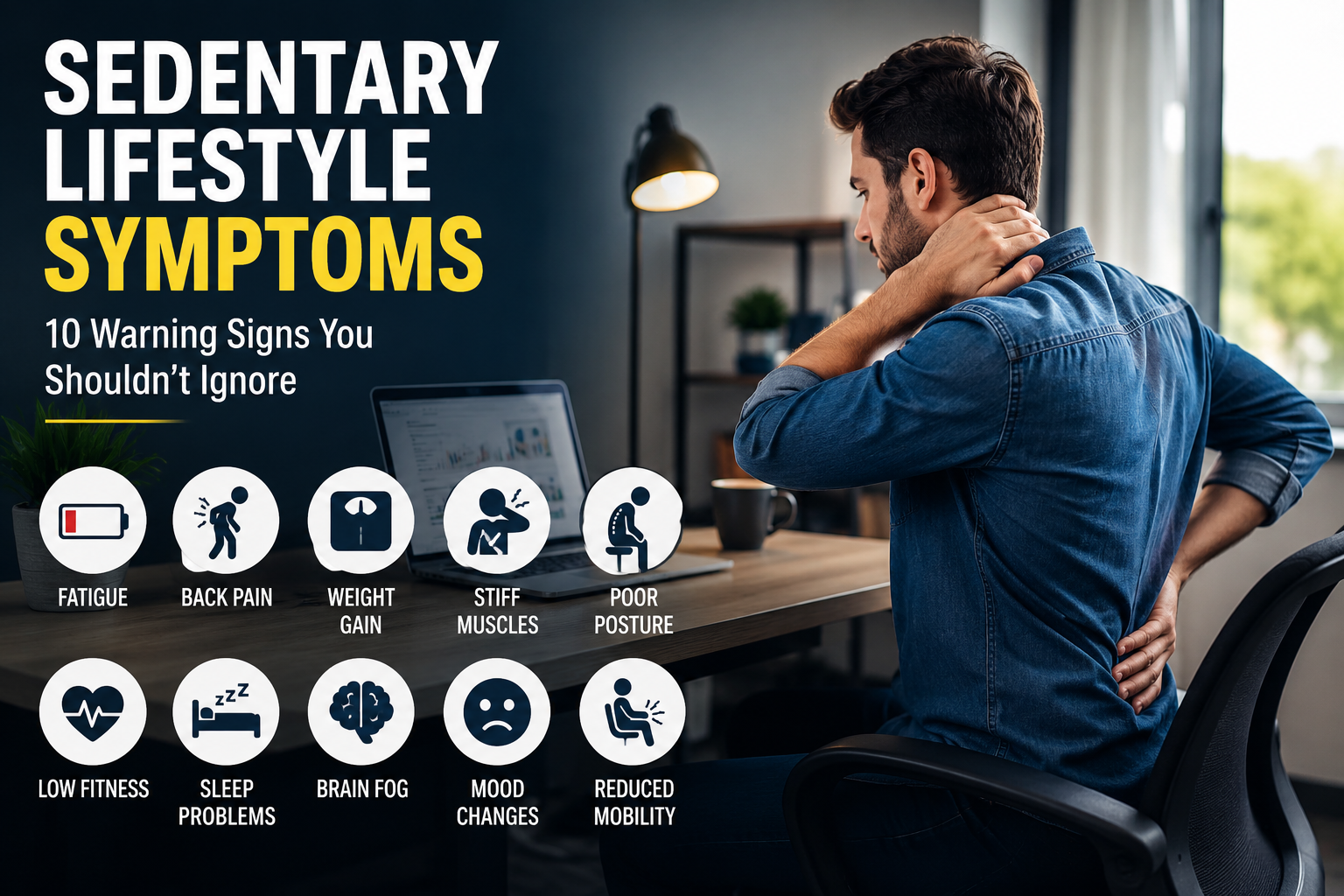
1. Constant Fatigue
One of the first symptoms I noticed was persistent tiredness.
It sounds backward because sitting requires very little energy. You would think resting all day would make you feel more energetic.
Instead, prolonged inactivity can make your body feel sluggish.
Many people experience:
- Low energy throughout the day
- Afternoon crashes
- Feeling tired despite adequate sleep
- Reduced motivation
The less active you become, the harder it often feels to get moving.
2. Stiff Muscles and Joint Pain
When your body stays in the same position for hours, muscles can tighten and joints become less mobile.
Common areas affected include:
- Lower back
- Neck
- Shoulders
- Hips
- Knees
I used to stand up after long work sessions and feel like I needed several minutes just to loosen up.
Many office workers experience this daily without realizing it may be linked to inactivity.
3. Weight Gain
Weight gain is one of the most recognized sedentary lifestyle symptoms.
When physical activity decreases while calorie intake remains the same, the body burns fewer calories throughout the day.
The result can be:
- Gradual weight gain
- Increased belly fat
- Difficulty maintaining a healthy weight
What’s tricky is that the change often happens slowly. A few extra pounds each year may not seem significant until several years have passed.
4. Poor Posture
Long hours spent sitting can create posture problems.
Signs include:
- Rounded shoulders
- Forward head position
- Slouching
- Tight chest muscles
I noticed this when photos started showing my shoulders rolled forward compared to a few years earlier.
Poor posture can eventually contribute to discomfort, headaches, and reduced mobility.
5. Frequent Back Pain
Back pain and sedentary behavior often go hand in hand.
Sitting for prolonged periods places stress on the spine and surrounding muscles.
You may experience:
- Lower back soreness
- Tightness after sitting
- Pain when standing up
- General spinal discomfort
Many people assume they injured themselves somewhere, when the issue may simply be too much sitting.
6. Reduced Cardiovascular Fitness
Have you ever been surprised by how winded you become after a short walk or climbing stairs?
That can be a sign that your cardiovascular fitness has declined.
Symptoms may include:
- Shortness of breath during simple activities
- Elevated heart rate during light exercise
- Difficulty keeping up during physical activities
This symptom often develops slowly because people adapt their routines around their decreasing fitness levels.
7. Trouble Sleeping
This one caught me off guard.
I assumed being physically inactive would make sleeping easier.
Instead, I found myself:
- Taking longer to fall asleep
- Waking up during the night
- Feeling less refreshed in the morning
Regular movement helps regulate many of the body’s natural processes, including sleep quality.
8. Brain Fog and Poor Concentration
Sedentary lifestyle symptoms aren’t limited to physical health.
Mental effects can appear as well.
Many people report:
- Difficulty concentrating
- Reduced productivity
- Forgetfulness
- Mental fatigue
I often felt like my brain was operating at 80% capacity after spending an entire day sitting indoors.
A short walk frequently improved my focus more than another cup of coffee.
9. Mood Changes
Physical activity supports mental well-being.
When movement decreases significantly, some people notice:
- Increased irritability
- Lower motivation
- Feeling mentally drained
- Higher stress levels
While inactivity isn’t the only factor affecting mood, it can contribute more than many people realize.
10. Reduced Flexibility and Mobility
The body adapts to how it is used.
If you spend most of your day sitting, muscles and joints gradually become less mobile.
Signs include:
- Difficulty touching your toes
- Tight hips
- Limited shoulder mobility
- Reduced range of motion
These changes can make everyday activities feel more challenging over time.
Why These Symptoms Are Often Ignored
One reason sedentary lifestyle symptoms are so common is that they develop slowly.
Most people don’t wake up one morning with severe problems.
Instead, symptoms creep in gradually:
- A little less energy
- Slight weight gain
- Occasional back pain
- Mild stiffness
Because the changes happen over months or years, they often feel normal.
That’s exactly what happened to me.
I assumed feeling stiff, tired, and sluggish was simply part of adult life.
It wasn’t.
Simple Ways to Reverse a Sedentary Lifestyle
The good news is that small changes can make a noticeable difference.
You don’t need to become a marathon runner or spend hours in the gym.
Start Walking More
Walking is one of the easiest ways to increase daily activity.
Practical ideas include:
- Walking during lunch breaks
- Taking phone calls while walking
- Parking farther away
- Choosing stairs when possible
Even short walks add up.
Take Movement Breaks
One habit that helped me significantly was standing up every hour.
A simple routine:
- Stand up.
- Stretch for one minute.
- Walk around for two to three minutes.
- Return to work.
The entire process takes less than five minutes.
Use a Step Goal
Tracking steps helped me become more aware of how little I was moving.
Many fitness trackers and smartphones can monitor daily steps automatically.
You don’t need to chase huge numbers immediately.
The goal is simply to move more than you did yesterday.
Add Strength Training
Strength training supports:
- Muscle health
- Posture
- Joint function
- Metabolism
Even two or three sessions per week can complement increased daily movement.
Read more about how many days a week should one workout in my other blog post
Create an Active Environment
Sometimes the environment matters more than motivation.
Simple adjustments include:
- Keeping walking shoes visible
- Using reminders to stand
- Taking meetings while walking
- Setting activity goals with friends or family
Small environmental changes can make healthy habits easier to maintain.

Common Mistakes People Make
Thinking Exercise Alone Solves Everything
Many people assume one workout cancels out an entire day of sitting.
Regular exercise is valuable, but daily movement still matters.
Trying Too Much Too Quickly
I’ve seen people go from almost no activity to intense daily workouts.
That often leads to burnout.
Consistency beats intensity.
Ignoring Early Symptoms
Fatigue, stiffness, and poor posture may seem minor, but they are often early warning signs.
Addressing them early is easier than dealing with larger health problems later.
Sitting for Hours Without Breaks
Even active people can experience problems if they remain seated for long uninterrupted periods.
Frequent movement throughout the day is important.
My Biggest Lesson
Looking back, the biggest mistake I made was assuming that inactivity only affects people who never exercise.
The truth is that sitting too much can impact almost anyone.
Once I started paying attention to my daily movement instead of only focusing on workouts, I noticed meaningful improvements in my energy, posture, sleep quality, and overall well-being.
If you’ve been experiencing unexplained fatigue, stiffness, back pain, poor concentration, or gradual weight gain, it may be worth examining how much time you spend sitting each day.
Sometimes the solution isn’t a complicated diet, expensive supplement, or extreme fitness program.
Sometimes it’s simply getting up and moving more often.