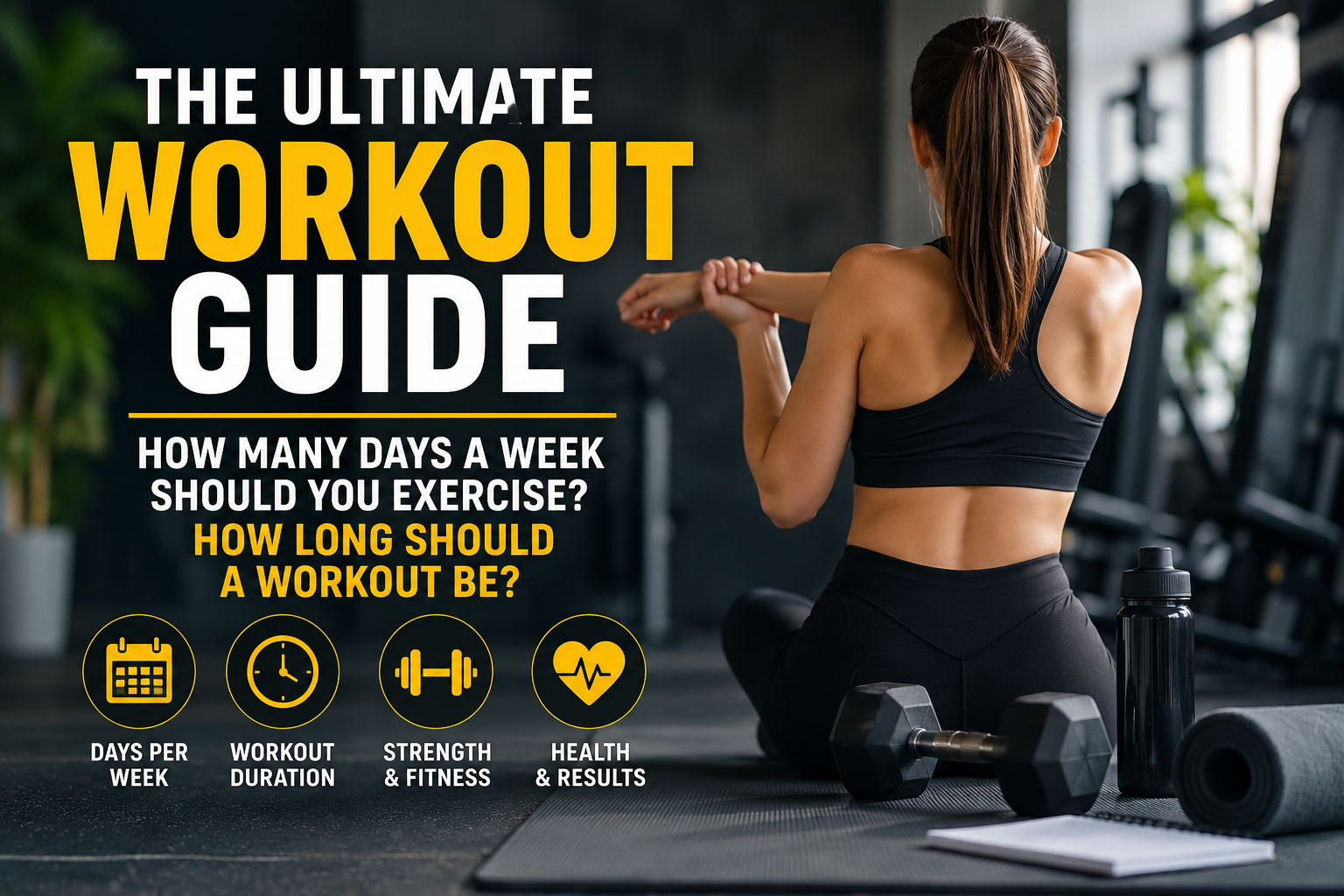
The Ultimate Workout Guide: How Many Days a Week Should You Workout?
The Ultimate Workout Guide: How Many Days a Week Should You Workout?
One of the most common questions people ask when they start taking fitness seriously is simple: how many days a week should I workout? Right after that comes the second question: how long should a workout be?
The confusing part is that everyone seems to have a different answer.
Some people say you need to train six days a week if you want results. Others say three days is enough. Some fitness videos make 20-minute workouts look powerful, while gym routines online sometimes take more than an hour. So it is easy to feel unsure before you even begin.
The truth is, there is no perfect workout schedule that fits everyone. Your ideal routine depends on your current fitness level, your goal, your daily routine, your recovery, and how consistent you can actually be.
A good workout plan should make you feel stronger, healthier, and more energetic. It should not leave you exhausted all the time or make fitness feel like another stressful task on your list.
Let’s break it down in a simple and realistic way.
What Counts as a Workout?
Before deciding how often you should workout, it helps to understand what a workout actually means.
A workout does not always have to be a long gym session with heavy weights. It can be strength training, brisk walking, cycling, swimming, yoga, Pilates, bodyweight exercises, dancing, or a home workout routine.
The key is that your body is moving with purpose.
If your heart rate goes up, your muscles are being used, and you are challenging your body more than you would during normal daily activity, it counts. For some people, that may be a 30-minute walk. For others, it may be a full strength training session.
This matters because many beginners delay starting because they think a “real workout” has to be intense. It does not. A realistic workout routine is always better than a perfect routine you cannot maintain.
How Many Days a Week Should You Workout?
For most people, working out 3 to 5 days a week is a realistic and effective target.
If you are a beginner, starting with 3 days a week is usually enough. This gives your body time to adjust, recover, and build the habit without feeling overwhelmed.
If you already have some fitness experience, 4 to 5 days a week can work well. This allows you to include a mix of strength training, cardio, mobility, and active recovery.
If you are more advanced or training for a specific goal, you may workout 5 to 6 days a week, but not every session should be intense. Even experienced people need rest days.
The mistake many people make is thinking more workout days always means better results. That is not always true. Your body improves during recovery, not only during exercise. If you train hard every single day without rest, your energy can drop, your performance can suffer, and you may feel sore or unmotivated.
A balanced weekly workout routine should include both movement and recovery.
A Simple Rule for Beginners
If you are just starting, aim for this:
3 workout days per week, 30 to 45 minutes per session.
That is enough to build momentum.
You can do full-body workouts on Monday, Wednesday, and Friday. On the other days, you can walk, stretch, or simply stay lightly active.
For example:
Monday: Full-body strength workout
Tuesday: Walk or rest
Wednesday: Full-body strength workout
Thursday: Light cardio or stretching
Friday: Full-body strength workout
Saturday: Walk, yoga, or active recovery
Sunday: Rest
This type of routine works because it is simple. You do not have to think too much. You show up, train your whole body, recover, and repeat.
Once the habit feels easier, you can add another workout day if you want.
How Many Days a Week Should You Workout for Weight Loss?
If your main goal is weight loss, a good target is 4 to 5 days of exercise per week, but that does not mean you need to do hard workouts every day.
Weight loss usually works best when exercise is combined with healthy eating, enough sleep, and daily movement. A workout helps burn calories, build muscle, improve fitness, and keep you motivated, but it should not be the only part of your plan.
A balanced weekly routine for weight loss could look like this:
2 to 3 days of strength training
2 to 3 days of cardio or brisk walking
1 to 2 rest or active recovery days
Strength training is important because it helps you build and maintain muscle. Cardio is helpful because it improves heart health and increases calorie burn. Walking is also underrated, especially for people who spend long hours sitting.
If you have a sedentary lifestyle, even a daily walk can make a big difference in how active your body feels. You do not have to jump into intense workouts immediately.
The best workout plan for weight loss is the one you can repeat week after week without burning out.
How Many Days a Week Should You Workout to Build Muscle?
If your goal is building muscle, aim for 3 to 5 strength training days per week.
Beginners can build strength with three full-body workouts per week. More experienced people may prefer a split routine, where different muscle groups are trained on different days.
For example:
Monday: Upper body
Tuesday: Lower body
Wednesday: Rest or light cardio
Thursday: Upper body
Friday: Lower body
Saturday: Optional core, mobility, or light cardio
Sunday: Rest
The important thing is not only how many days you train, but how well you train. Your muscles need enough challenge, enough protein, and enough rest to grow stronger.
Doing random exercises every day without a plan may not give the results you want. A simple routine with progressive improvement is much more effective.
Progressive improvement means slowly increasing the challenge over time. That could mean lifting a little heavier, doing more reps, improving your form, or reducing rest time between sets.

How Long Should a Workout Be?
For most people, a good workout should be around 30 to 60 minutes.
That range is enough for strength training, cardio, or a mix of both. You do not need to spend two hours in the gym to see progress.
A beginner workout can be as short as 20 to 30 minutes. At the start, the goal is to build consistency, learn proper form, and avoid doing too much too soon.
A moderate workout for general fitness may take 30 to 45 minutes. This is a sweet spot for many people because it is long enough to be effective but short enough to fit into a busy day.
A more focused strength training workout may take 45 to 60 minutes, especially if you are warming up properly and resting between sets.
Longer workouts are not always better. If a workout is too long, you may lose focus, feel drained, or struggle to stay consistent. A shorter workout done with good effort is often better than a long workout done with low energy.
What Should Be Included in a Good Workout?
A balanced workout usually has three parts: warm-up, main workout, and cool-down.
The warm-up can be 5 to 10 minutes. This prepares your body for movement and may include light cardio, mobility exercises, or dynamic stretching.
The main workout is where you focus on your goal. If you are strength training, this may include exercises like squats, lunges, push-ups, rows, shoulder presses, deadlifts, or core work. If you are doing cardio, it may include brisk walking, cycling, jogging, swimming, or intervals.
The cool-down can be 5 minutes. This helps your body slow down and gives you a chance to stretch lightly, breathe, and relax after training.
A simple 45-minute workout could look like this:
5 minutes warm-up
30 to 35 minutes main workout
5 minutes cool-down
This structure keeps things simple and easy to follow.
Is a 20-Minute Workout Enough?
Yes, a 20-minute workout can be enough, especially if you are consistent and use the time well.
Many people avoid working out because they think they need a full hour. But if you only have 20 minutes, use those 20 minutes. A short workout is still better than doing nothing.
A 20-minute workout can include bodyweight squats, push-ups, glute bridges, planks, lunges, mountain climbers, or a quick dumbbell routine. You can also do a brisk walk, a short cycling session, or a low-impact home workout.
The key is effort. If you stay focused and choose the right exercises, 20 minutes can help improve strength, fitness, and energy.
Short workouts are also great for busy people. If you cannot workout for 45 minutes, do not skip the day completely. Do 15 to 20 minutes and keep the habit alive.
Is a 1-Hour Workout Too Long?
A 1-hour workout is not too long if your body can handle it and the session is planned well.
For example, a strength training session may naturally take close to an hour because you need warm-up sets, proper rest, and time to train different muscle groups. A yoga class, cycling class, or gym workout may also last around 60 minutes.
The problem starts when every workout becomes unnecessarily long or intense. If you feel exhausted after every session, struggle to recover, or start dreading workouts, your routine may be too much.
A good workout should challenge you, but it should not destroy your energy for the rest of the day.
Should You Workout Every Day?
You can move your body every day, but you do not need to do intense workouts every day.
There is a difference between daily movement and daily hard training.
Daily movement can include walking, stretching, gentle yoga, housework, or light cycling. These activities can support your health and help you feel active.
Hard training includes heavy strength workouts, intense cardio, sprint intervals, or long demanding sessions. These require more recovery.
For most people, it is better to have 3 to 5 structured workouts per week and use the other days for light movement or rest.
Rest days are not wasted days. They help your muscles recover, your energy return, and your motivation stay fresh.
A Realistic Weekly Workout Plan
Here is a simple weekly workout plan that works for many people:
Monday: Strength training
Tuesday: Cardio or brisk walking
Wednesday: Strength training
Thursday: Rest or stretching
Friday: Strength training
Saturday: Cardio, walking, or active recovery
Sunday: Rest
This gives you three strength days, two lighter movement days, and two recovery days.
If you want a 4-day workout routine, you can do:
Monday: Upper body
Tuesday: Lower body
Wednesday: Rest
Thursday: Upper body
Friday: Lower body
Saturday: Walk or light cardio
Sunday: Rest
If you prefer home workouts, you can still follow the same structure. You do not need expensive equipment. Bodyweight exercises, resistance bands, and a pair of dumbbells can be enough to start.
How to Know If Your Workout Routine Is Working
A workout routine is working if you notice small improvements over time.
You may feel stronger. You may walk faster without getting tired. Your posture may improve. Your clothes may fit differently. You may sleep better. You may have more energy during the day.
Progress is not always about the scale. Sometimes your weight may stay the same while your body becomes stronger and more toned.
Track simple things like:
How many workouts you complete each week
How your energy feels
How your strength improves
How your clothes fit
How your mood changes
How your sleep feels
These signs can tell you a lot.
Common Workout Mistakes to Avoid
One common mistake is doing too much too soon. Many people start with six intense workout days, then quit after two weeks because their body feels tired and sore.
Another mistake is only doing cardio and avoiding strength training. Cardio is useful, but strength training helps build muscle, support metabolism, and improve body shape.
A third mistake is not resting enough. Rest is part of the routine, not a break from the routine.
Another mistake is changing workouts too often. It is okay to try new exercises, but your body needs consistency to improve. Follow a plan for a few weeks before deciding whether it works.
The last mistake is expecting fast results. Fitness takes time. You do not need a perfect routine. You need a routine you can repeat.
Final Thoughts: What Is the Best Workout Schedule?
The best workout schedule is one that matches your life, your body, and your goals.
For most people, 3 to 5 workout days per week is enough. Beginners can start with 3 days. People with weight loss, strength, or fitness goals can move toward 4 to 5 days. Advanced exercisers may train more often, but recovery still matters.
For workout length, aim for 30 to 60 minutes. If you are new or busy, 20 minutes is still valuable. If you enjoy longer sessions and recover well, 60 minutes can work too.
The most important thing is consistency.
You do not need to punish your body to become fit. You need to move regularly, train smart, rest well, and give yourself enough time to improve.
A workout routine should support your life, not take it over. Start with what feels realistic, build slowly, and let your progress grow from there.