Sedentary Lifestyle: 9 Powerful Ways It Affects Your Health and How to Fix It
A sedentary lifestyle can slowly become part of our daily routine without us even noticing. Many people spend hours sitting at work, studying, driving, watching TV, or scrolling on their phones. At first, it may not seem like a big problem, but over time, too much sitting and too little movement can affect both physical and mental health.
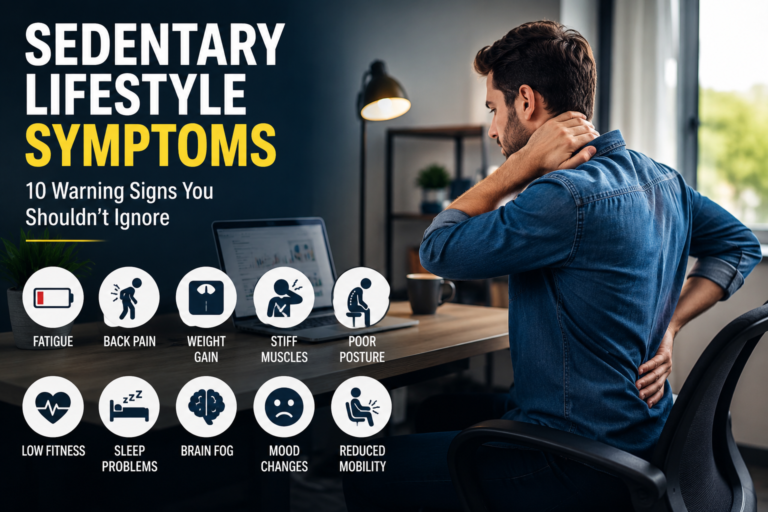
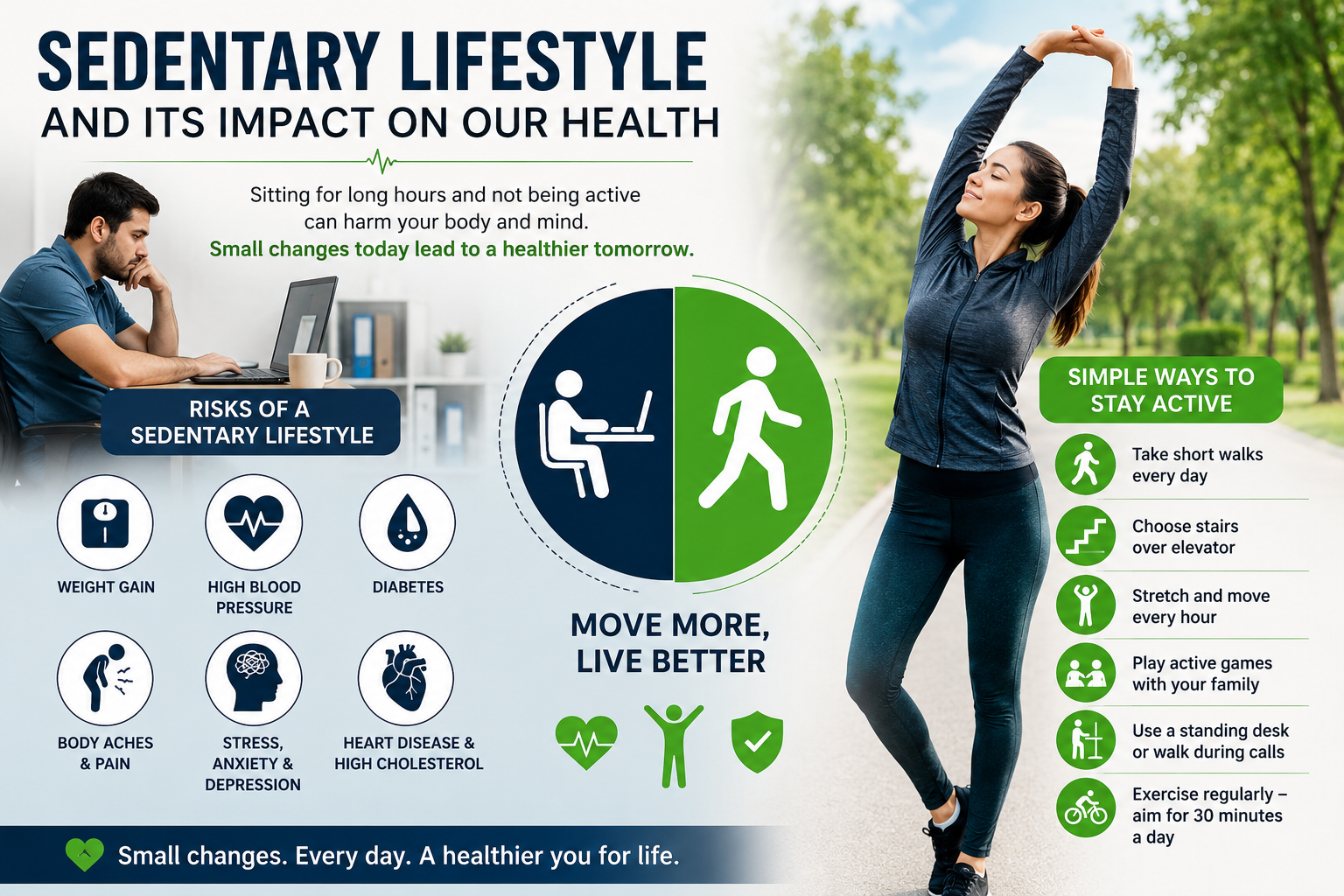
Sedentary behavior can contribute to weight gain, high blood pressure, poor sleep, fatigue, body aches, and a higher risk of long-term health problems. It can also affect mood, focus, and energy levels.
The good news is that you do not need to completely change your life overnight. Small daily changes, such as walking more, stretching, standing up regularly, and reducing long periods of sitting, can make a meaningful difference.
In this article, we will look at what a sedentary lifestyle is, how it affects your health, and simple ways to become more active during the day.
What Is a Sedentary Lifestyle?
A sedentary lifestyle means spending a large part of the day sitting, reclining, or lying down while doing very little physical activity. It includes activities that use very little energy, such as sitting at a desk, watching television, driving for long periods, or using a phone while lying down.
In simple words, a sedentary lifestyle is not only about “not exercising.” It is also about sitting for too long throughout the day.
For example, a person may go to the gym for 30 minutes but still spend most of the remaining day sitting. That is why reducing sedentary behavior is important even if you already exercise sometimes.
Common examples of sedentary behavior include:
- Sitting at a desk for many hours
- Watching TV for long periods
- Driving or commuting for a long time
- Sitting while studying or working on a computer
- Spending too much time scrolling on a phone
- Lying down for long periods while awake
Modern life makes this very easy. Many jobs require computer work, many students study online, and many people relax with screens after a long day. Because of this, sedentary habits can build up quietly.

How Much Physical Activity Do Adults Need?
Many health guidelines recommend that adults aim for at least 150 minutes of moderate-intensity physical activity per week. This can include brisk walking, cycling, swimming, dancing, or any activity that raises your heart rate.
A simple way to understand this is 30 minutes of activity, 5 days a week.
Adults are also encouraged to include muscle-strengthening activities at least 2 days per week. This can include bodyweight exercises, resistance bands, weight training, or strength-based home workouts.
However, this does not mean you must start with a difficult fitness routine. If you are currently inactive, even short walks and light stretching are a good beginning.
Problems Caused by a Sedentary Lifestyle
A sedentary lifestyle can affect the body in many ways. Some effects may appear quickly, such as stiffness or low energy. Others may develop slowly over time.
1. Poor Sleep
When you do not move enough during the day, your body may not feel naturally tired at night. This can make it harder to fall asleep or stay asleep.
Physical activity helps the body use energy, reduce stress, and support a healthier sleep routine. Even a daily walk can help some people feel more relaxed by bedtime.
Poor sleep can then create another problem. When you are tired, you may feel less motivated to move the next day. This can turn into a cycle of sitting more, sleeping poorly, and feeling low on energy.
2. Fatigue and Low Energy
It may sound strange, but sitting too much can actually make you feel more tired.
When you stay inactive for long periods, blood flow may slow down, muscles become stiff, and your body may feel heavy. Physical activity helps improve circulation and supports the release of feel-good chemicals such as endorphins.
You do not need an intense workout to feel the difference. A short walk, light stretching, or standing up regularly can help improve energy levels during the day.
3. Difficulty Concentrating
A lack of movement can also affect focus and alertness. When your body is inactive for too long, you may feel sleepy, distracted, or mentally slow.
This is common for people who work or study while sitting for many hours. Taking short movement breaks can help refresh the mind. Even walking around the room for a few minutes may help you return to your work with better focus.
4. Weight Gain
Sitting for long periods means the body burns fewer calories during the day. If calorie intake stays high while daily movement remains low, weight gain can happen over time.
A sedentary lifestyle can also encourage unhealthy eating habits. For example, people may snack more while watching TV, working late, or scrolling on their phones.
This does not mean you need an extreme diet to manage your weight. A better approach is to combine regular movement with balanced meals, enough protein, fiber-rich foods, and realistic eating habits.
If you are comparing different weight loss approaches, you may also want to read my guide on the Military Diet, where I explain what it is, how it works, and what to consider before trying it.
5. Body Aches and Poor Posture
Prolonged sitting can lead to back pain, neck stiffness, shoulder tension, and tight hips. This is especially common when posture is poor or when the chair and desk setup are uncomfortable.
When you sit for many hours, some muscles become tight while others become weak. Over time, this can affect posture and make everyday movement feel uncomfortable.
Simple habits can help, such as:
- Sitting with your feet flat on the floor
- Keeping your screen at eye level
- Taking short stretch breaks
- Standing up every hour
- Strengthening your back, core, and glutes
Small posture improvements can make a big difference if you work at a desk.
6. High Cholesterol
Physical inactivity can affect cholesterol levels. HDL is often called “good cholesterol” because it helps remove excess cholesterol from the bloodstream. LDL is often called “bad cholesterol” because high levels can contribute to plaque buildup in the arteries.
A sedentary lifestyle may negatively affect this balance, especially when combined with an unhealthy diet, weight gain, smoking, or other risk factors.
Regular physical activity, along with balanced eating habits, can support better heart health and healthier cholesterol levels.
7. High Blood Pressure and Heart Health Problems
Too much sitting can contribute to poor heart health. When the body is inactive for long periods, circulation may be affected, blood vessels may become less flexible, and the heart may have to work harder over time.
A sedentary lifestyle may increase the risk of high blood pressure and cardiovascular disease, especially when combined with other factors such as stress, poor diet, obesity, smoking, or lack of sleep.
The goal is not to panic, but to become more aware. Adding more movement to your day is one of the simplest ways to support heart health.
8. Type 2 Diabetes Risk
Low physical activity can contribute to insulin resistance, which means the body may not use insulin as effectively. Over time, this can increase the risk of type 2 diabetes.
Movement helps muscles use glucose for energy. This is one reason why even a short walk after meals can be helpful for many people.
Healthy eating also matters. Some people explore low-carb eating styles when trying to manage weight or blood sugar habits. If you are curious about that approach, you can read my beginner-friendly post on the Keto Diet to understand the basics, benefits, and possible drawbacks.
9. Low Mood, Stress, and Anxiety
A sedentary lifestyle can also affect mental well-being. Physical activity supports the release of chemicals such as endorphins and serotonin, which are linked to mood and emotional balance.
When you sit for long periods and do not move much, you may feel more stressed, restless, or low in motivation. This does not mean sitting causes depression or anxiety by itself, but lack of movement can be one contributing factor.
Even gentle activity can help. Walking outside, stretching, dancing, or doing light home exercise can support both body and mind.
Deep Vein Thrombosis and Long Periods of Sitting
Sitting still for a very long time can slow blood flow in the legs. In some situations, this may increase the risk of a blood clot forming in a deep vein, known as deep vein thrombosis.
This is more likely during long flights, long car journeys, recovery after surgery, or long periods of immobility.
It is important to move your legs, stand when possible, drink water, and take breaks during long sitting periods. If you ever notice sudden leg swelling, pain, warmth, redness, chest pain, or shortness of breath, seek medical help immediately.
How to Reduce a Sedentary Lifestyle
Reducing a sedentary lifestyle does not mean you must spend hours at the gym. The first step is to break up long periods of sitting and add more movement into your normal routine.
Here are simple ways to become more active.
Take Short Walking Breaks
A short walk can refresh your body and mind. You can walk after meals, during lunch breaks, or in the evening.
Start with 5 to 10 minutes if you are not used to walking. Over time, you can increase your pace and duration.
Stand Up Every Hour
If you sit for work or study, set a reminder to stand up every hour. Stretch your legs, roll your shoulders, or walk around the room for a few minutes.
This small habit can reduce stiffness and help you feel more awake.
Use the Stairs
Taking the stairs instead of the elevator is a simple way to add movement to your day. You do not have to do it every time. Even once or twice a day is a good start.
Walk While Talking on the Phone
Phone calls are a great opportunity to move. Instead of sitting, walk around your home, office, or garden while talking.
This can add extra steps without feeling like exercise.
Park Farther Away
If you drive, park a little farther from the entrance when it is safe to do so. These small walking moments add up during the week.
Try a Standing Desk
A standing desk or adjustable desk can help reduce sitting time. However, standing all day is not the goal either. The best approach is to change positions regularly between sitting, standing, and walking.
Stretch During Screen Time
If you watch TV or use your phone in the evening, use some of that time for light stretching. You can stretch your neck, shoulders, hips, and legs while watching something.
Make Housework More Active
Cleaning, folding laundry, gardening, and organizing your home can all help you move more. Put on music and turn chores into light activity.
Play Active Games with Children
If you have children at home, play games that involve movement. Dancing, chasing games, ball games, or outdoor walks can help the whole family become more active.
Start With Realistic Exercise
If you are new to exercise, do not start with a routine that feels impossible. Begin with simple activities such as walking, beginner strength exercises, or short home workouts.
Consistency matters more than perfection.
A Simple Daily Routine to Sit Less
Here is an easy routine you can try:
Morning: Stretch for 5 minutes after waking up.
After breakfast: Take a short walk if possible.
During work or study: Stand up for 2 to 5 minutes every hour.
Lunch break: Walk for 10 minutes after eating.
Evening: Do light stretching or a short home workout.
Before bed: Reduce screen time and relax your body.
This may look simple, but simple routines are often easier to maintain.
Final Thoughts
A sedentary lifestyle can affect your health in many ways, from low energy and body aches to a higher risk of long-term health problems. But the solution does not have to be extreme.
You do not need to change everything overnight. Start with small steps. Stand more often. Walk a little more. Stretch during breaks. Move your body in ways that feel realistic for your lifestyle.
A healthier routine is built through small daily choices. When repeated consistently, these small actions can help you feel more active, more energetic, and more in control of your health.
Frequently Asked Questions About a Sedentary Lifestyle
What is considered a sedentary lifestyle?
A sedentary lifestyle means spending too much time sitting, reclining, or lying down while doing very little physical activity. Common examples include desk work, long screen time, driving for hours, and watching TV for long periods.
Is sitting all day bad even if I exercise?
Exercise is very helpful, but sitting for long uninterrupted periods can still affect your health. It is better to combine regular exercise with movement breaks throughout the day.
How often should I stand up if I work at a desk?
A good habit is to stand up, stretch, or walk for a few minutes every hour. If possible, you can also take shorter movement breaks every 30 minutes.
Can a sedentary lifestyle cause weight gain?
A sedentary lifestyle can contribute to weight gain because the body burns fewer calories when inactive. It can also lead to more snacking and lower energy levels, which may make weight management harder.
What is the best exercise for a sedentary person?
Walking is one of the best starting points because it is simple, low-impact, and easy to fit into the day. Beginner strength training, stretching, cycling, and swimming can also be good options depending on your fitness level.
How can I reduce sedentary behavior at home?
You can reduce sedentary behavior by walking while talking on the phone, stretching during TV time, doing housework actively, standing more often, and taking short walks during the day.
Can sitting too much affect mental health?
Yes, too much sitting and too little movement may contribute to low mood, stress, and reduced motivation. Physical activity can support mental well-being by improving energy, sleep, and mood.
Do I need to go to the gym to stop being sedentary?
No. You can reduce sedentary habits without going to the gym. Walking, stretching, taking stairs, standing more often, and doing short home workouts can all help.
When should I speak to a doctor?
You should speak to a doctor if you have chest pain, shortness of breath, sudden leg swelling, severe pain, dizziness, or any health condition that makes exercise difficult. If you are inactive and have existing medical problems, it is also wise to get medical advice before starting a new exercise routine.