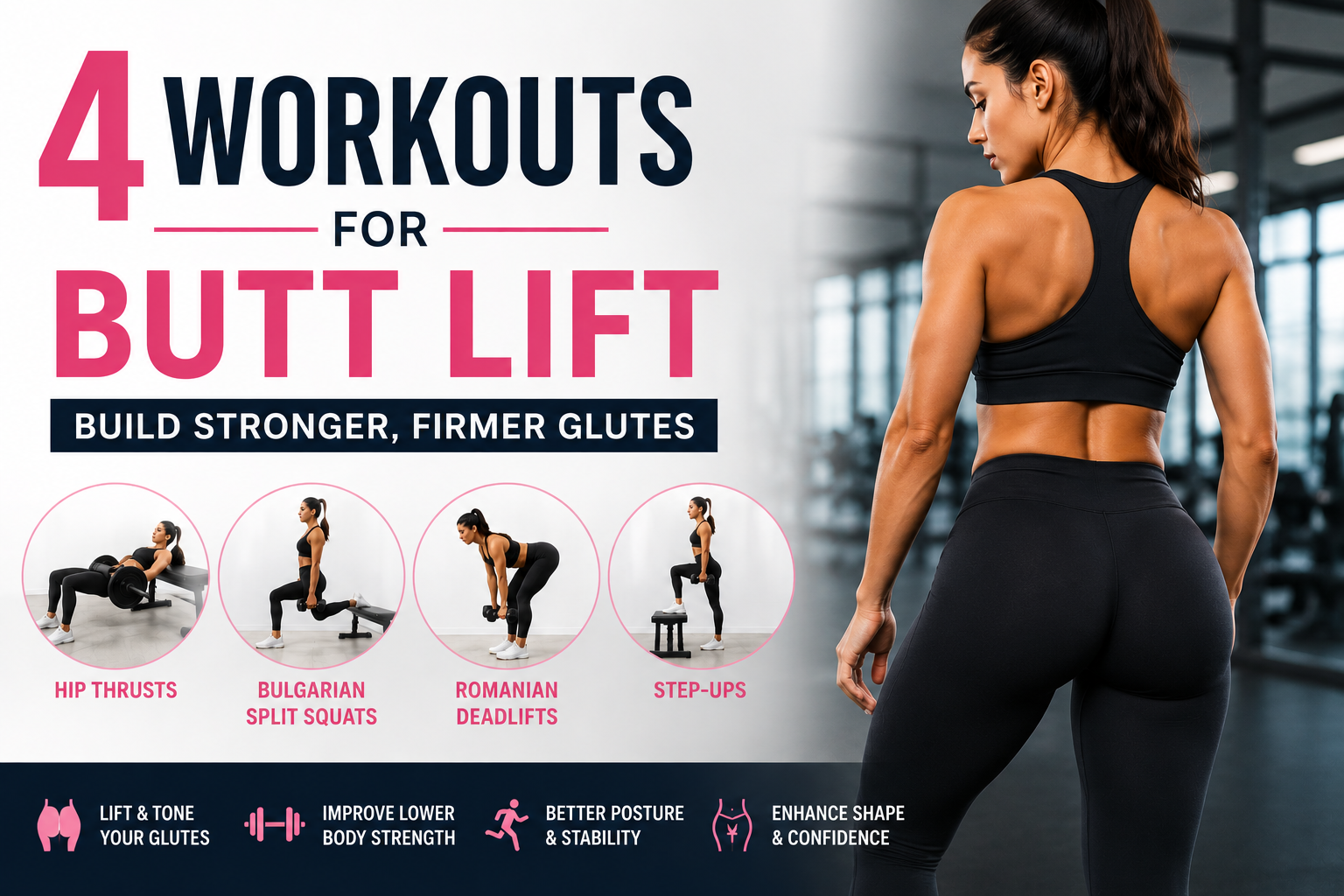
4 Workouts for Butt Lift That Actually Made a Difference for Me
4 Workouts for Butt Lift That Actually Made a Difference for Me
There was a time when I thought endless cardio was the answer to every fitness goal.
I spent months walking, running, and using the elliptical machine. I became leaner, but one thing never seemed to change: my glutes looked flat. No matter how much effort I put into my workouts, I wasn’t seeing the shape or lift I wanted.
The biggest mistake I made was assuming that simply exercising more would automatically create a firmer, more lifted appearance. It wasn’t until I started focusing specifically on glute training that I noticed real changes.
The good news is that you don’t need complicated gym machines or extreme workout plans. A handful of effective exercises performed consistently can help strengthen and develop the glute muscles, creating a more toned and lifted appearance over time.
If you’re looking for practical workouts that target the glutes and can fit into a realistic fitness routine, these are the four exercises that gave me the best results.
Understanding What Creates a “Butt Lift”
Before jumping into the exercises, it’s important to understand something that many fitness influencers skip.
There is no exercise that literally lifts the butt overnight.
What creates the appearance of a lifted butt is building and strengthening the glute muscles, especially the gluteus maximus, which is the largest muscle in the area. As these muscles become stronger and more developed, they can create a fuller and firmer look.
Genetics, body fat percentage, and overall muscle development all play a role, but targeted strength training remains one of the most effective approaches.
When I finally stopped chasing quick fixes and started focusing on progressive strength training, I began seeing gradual improvements within a few months.
Workout 1: Hip Thrusts
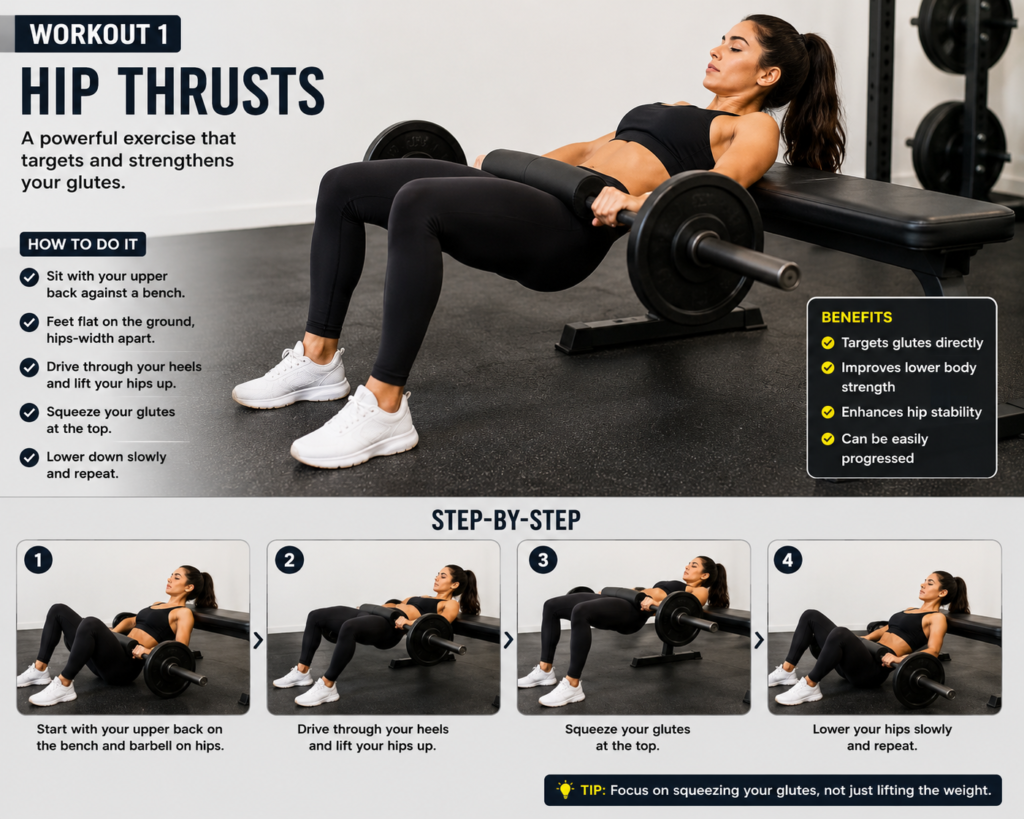
If I could only choose one glute exercise for the rest of my life, it would probably be the hip thrust.
This exercise directly targets the glutes and allows you to progressively increase resistance as you get stronger.
How to Perform a Hip Thrust
- Sit on the floor with your upper back against a bench.
- Bend your knees and place your feet flat on the ground.
- Keep your feet roughly shoulder-width apart.
- Drive through your heels and lift your hips upward.
- Squeeze your glutes at the top position.
- Lower yourself slowly and repeat.
Beginner Recommendation
- 3 sets
- 10–15 repetitions
Why It Works
Many lower-body exercises involve several muscle groups, but hip thrusts place significant emphasis on the glutes. When I first added them to my routine, I felt muscle activation in areas that squats alone never seemed to target.
Common Mistake
Avoid arching your lower back at the top of the movement. The power should come from squeezing your glutes, not from overextending your spine.
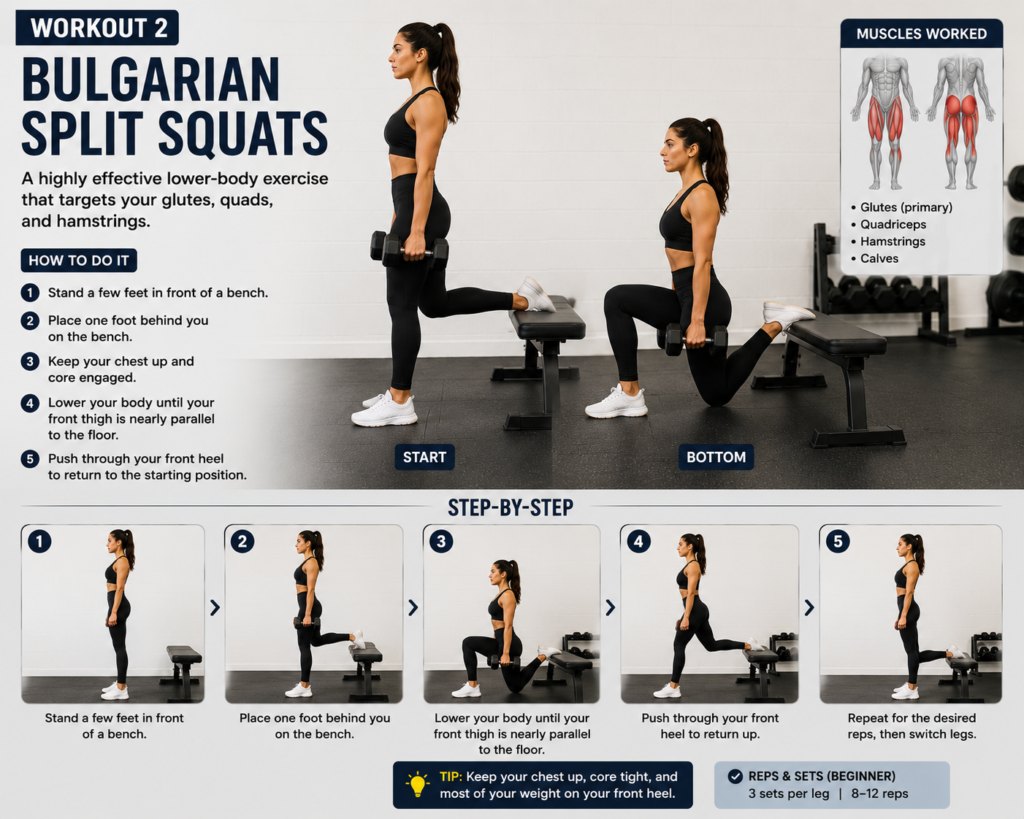
Workout 2: Bulgarian Split Squats
I avoided Bulgarian split squats for years because they looked intimidating.
After finally trying them, I understood why they are so highly recommended.
This exercise challenges balance, coordination, and lower-body strength while heavily engaging the glutes.
How to Perform Bulgarian Split Squats
- Stand a few feet in front of a bench or sturdy platform.
- Place one foot behind you on the bench.
- Keep your chest upright.
- Lower your body until your front thigh is nearly parallel to the floor.
- Push through the front heel to return to the starting position.
Beginner Recommendation
- 3 sets per leg
- 8–12 repetitions
Why It Works
Since one leg performs most of the work, the glutes are forced to stabilize and generate power throughout the movement.
I noticed that Bulgarian split squats not only improved my glute development but also helped identify strength imbalances between my legs.
Common Mistake
Many people place too much weight on the back leg. Focus on driving through the front heel and keeping most of your weight on the working leg.
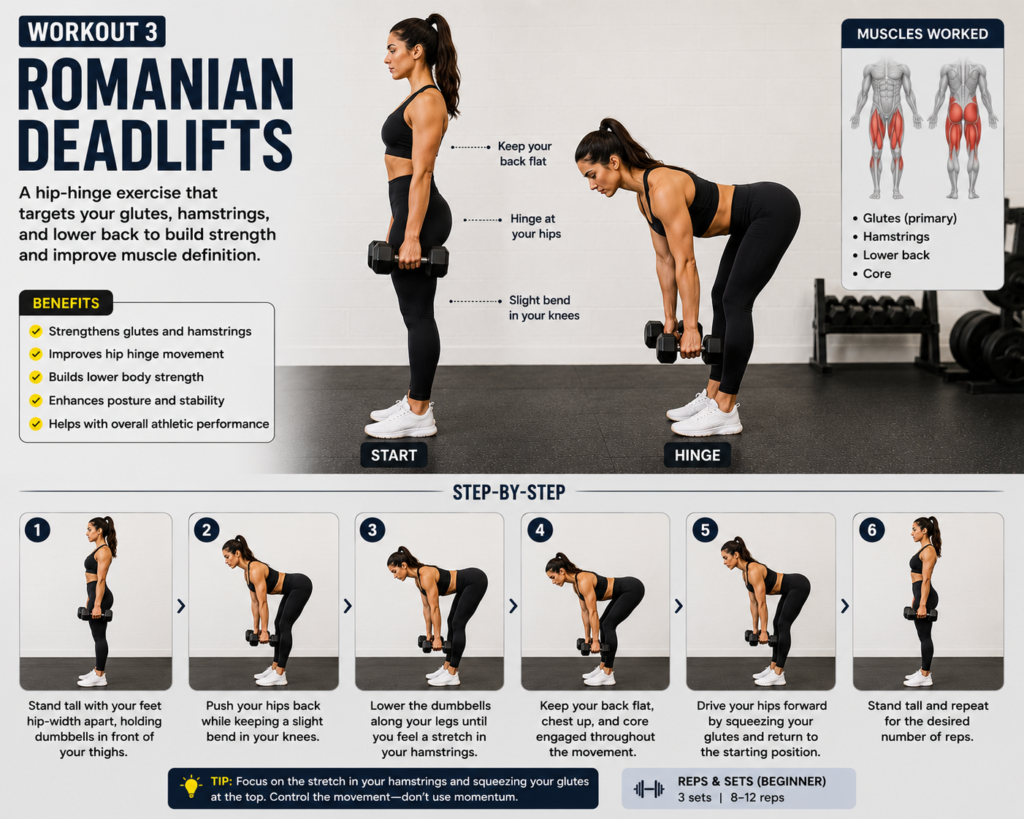
Workout 3: Romanian Deadlifts
Romanian deadlifts became one of my favorite exercises once I learned proper form.
At first, I assumed they were mainly a hamstring exercise. While they do target the hamstrings, they are also excellent for glute development.
How to Perform Romanian Deadlifts
- Hold a pair of dumbbells or a barbell in front of your thighs.
- Keep your knees slightly bent.
- Push your hips backward.
- Lower the weight while maintaining a straight back.
- Stop when you feel a stretch in your hamstrings.
- Drive your hips forward and return to standing.
Beginner Recommendation
- 3 sets
- 8–12 repetitions
Why It Works
The glutes work hard during the hip-hinge movement, especially when returning to the standing position.
This exercise helped me build strength in the entire posterior chain, including the glutes, hamstrings, and lower back.
Common Mistake
Do not turn the exercise into a squat. The movement should involve pushing the hips backward rather than bending deeply at the knees.
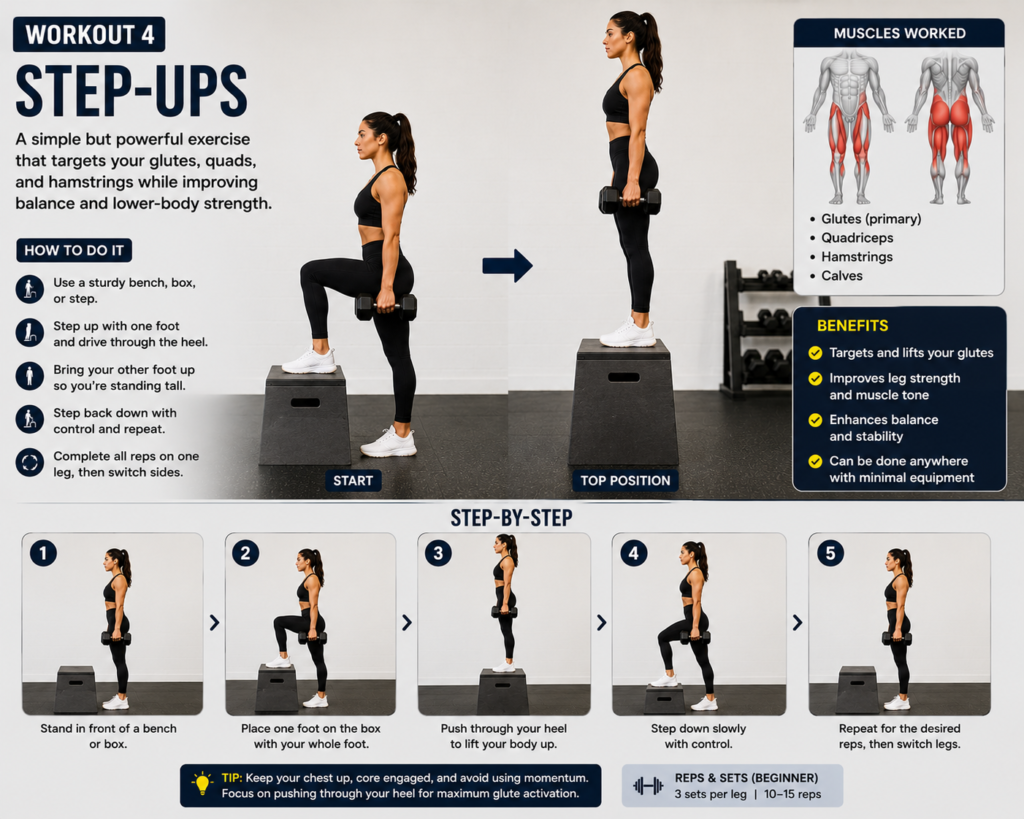
Workout 4: Step-Ups
Step-ups might look simple, but don’t underestimate them.
I started adding them to my workouts when I wanted an exercise I could perform almost anywhere. They quickly became one of the most effective bodyweight movements in my routine.
How to Perform Step-Ups
- Stand in front of a sturdy bench, box, or step.
- Place one foot on the elevated surface.
- Push through that foot and lift your body upward.
- Bring the opposite foot onto the platform.
- Step back down slowly.
Beginner Recommendation
- 3 sets per leg
- 10–15 repetitions
Why It Works
The glutes must generate force to lift your body onto the platform.
Adding dumbbells later can increase the challenge significantly.
Common Mistake
Avoid using momentum. Focus on controlled movement and pushing through the working leg rather than bouncing upward.
Sample Weekly Butt Lift Workout Routine
If you’re unsure how to combine these exercises, here’s a simple routine that works well for many beginners.
Day 1
- Hip Thrusts: 3 sets x 12 reps
- Bulgarian Split Squats: 3 sets x 10 reps
- Step-Ups: 3 sets x 12 reps
Day 2
- Romanian Deadlifts: 3 sets x 10 reps
- Hip Thrusts: 3 sets x 12 reps
- Step-Ups: 3 sets x 15 reps
Allow at least one day of recovery between glute-focused sessions.
For most people, training glutes two to three times per week is enough.
Nutrition Matters More Than Most People Realize
One lesson I learned the hard way is that exercise alone doesn’t guarantee results.
For muscle growth and recovery, your body needs adequate nutrition.
Some basic guidelines include:
- Eating enough protein daily
- Staying hydrated
- Consuming balanced meals
- Getting enough sleep
- Avoiding crash diets
I spent weeks training hard while barely eating enough protein. Once I improved my nutrition, my progress became much more noticeable.
How Long Does It Take to See Results?
This is probably the most common question people ask.
The honest answer is that it depends on several factors:
- Genetics
- Training consistency
- Nutrition
- Recovery
- Starting fitness level
Many people begin noticing strength improvements within a few weeks.
Visible changes often take several months of consistent effort.
In my own experience, I started feeling stronger after about three weeks, but the visual changes became more noticeable after two to three months of regular training.
Common Mistakes That Can Slow Progress
Doing Only Cardio
Cardio has health benefits, but it won’t maximize glute development on its own.
Not Increasing Resistance
Your muscles adapt over time.
Gradually increasing weight, repetitions, or difficulty is important for continued progress.
Skipping Recovery
Muscles grow during recovery, not during the workout itself.
Poor sleep and excessive training can limit results.
Inconsistent Training
Doing glute workouts once every few weeks won’t create significant changes.
Consistency beats perfection every time.
Using Poor Form
Good technique is more important than lifting heavy weights.
Master movement patterns before increasing resistance.
Final Thoughts
When I first started trying to improve the appearance of my glutes, I wasted a lot of time chasing shortcuts and random workout trends online. What eventually worked was surprisingly simple: focusing on a few effective exercises, improving my form, staying consistent, and being patient.
Hip thrusts, Bulgarian split squats, Romanian deadlifts, and step-ups remain some of the most reliable glute-building exercises I’ve used. They don’t require fancy equipment or complicated workout plans, and they can be adjusted for almost any fitness level.
If you stay consistent, challenge yourself gradually, and support your workouts with good nutrition and recovery, you’ll give yourself the best chance of building stronger glutes and achieving a firmer, more lifted appearance over time.